

Compression Therapy: Benefits, Science & Home Recovery
At a Glance
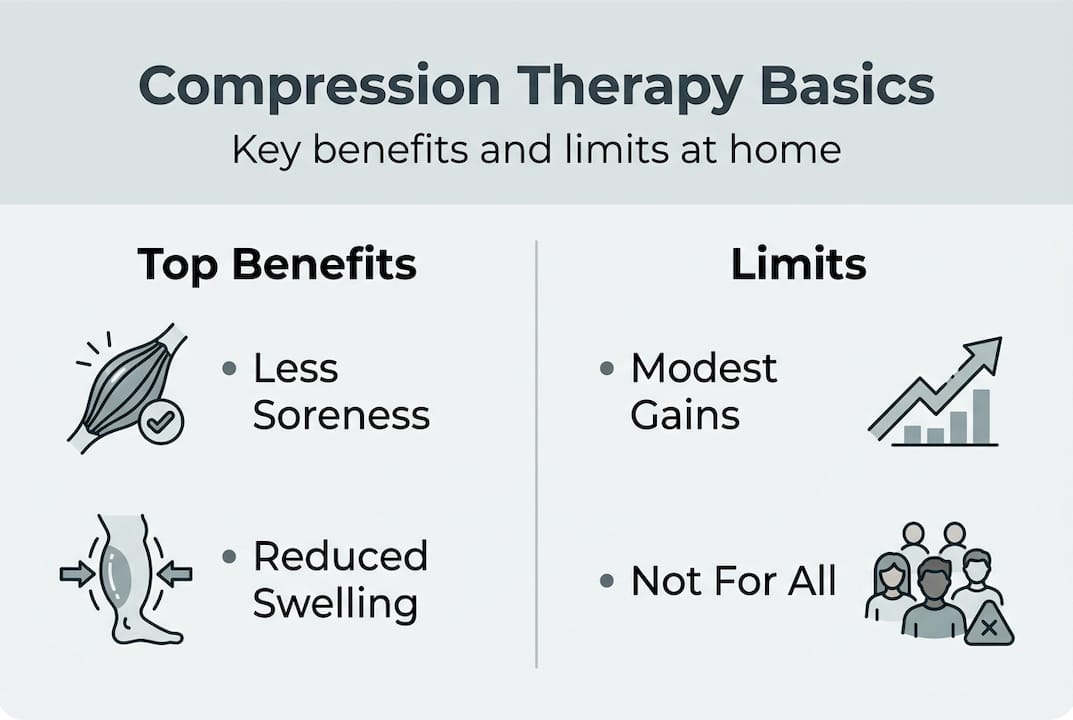
- Meta-analyses show small-to-moderate reductions in DOMS and up to 35% reduction in swelling with correct use [1]
- A meta-analysis of 33 RCTs found no significant improvement in running endurance — compression helps you recover, not race faster [2]
- Perceptual benefits are real and consistent — users reliably report feeling lighter and less sore, even when objective metrics don't shift
- Pneumatic compression is generally more effective for recovery than static garments [1]
- Do not use compression with severe arterial disease, untreated DVT, or decompensated heart failure
- Compression works best as one layer of a recovery stack — not a replacement for sleep, movement, or nutrition
Most people assume compression therapy belongs in professional sports clinics or hospital wards. That assumption is wrong. Studies show it can meaningfully reduce muscle soreness and swelling for everyday people recovering at home — not just elite athletes pushing their limits.
Whether you're bouncing back from a tough workout, managing tired legs after long hours on your feet, or simply looking to feel better faster, compression therapy offers a practical, evidence-backed tool worth understanding. This guide covers how it works, what the science actually supports, who should use caution, and how to apply it safely and effectively at home.
What Is Compression Therapy and How Does It Work?
Compression therapy applies controlled, graduated pressure to the body — typically the limbs — to improve circulation and reduce swelling. The word "graduated" is key. Pressure is highest at the point farthest from your heart and decreases as it moves upward, encouraging blood and lymphatic fluid to flow back toward the heart more efficiently.
- Static compression: Garments like compression socks, sleeves, and tights that apply constant pressure. Affordable, portable, and easy to use — the lowest-friction entry point.
- Pneumatic compression: Devices that inflate and deflate in cycles — boots or sleeves connected to a pump. More dynamic and, in some studies, more effective for recovery than static options [1].
When pressure is applied to tissue, it reduces the space available for excess fluid to accumulate — limiting edema and supporting venous return. Fit and pressure level matter enormously. Ill-fitting or excessive pressure risks ischemia, a dangerous reduction in blood flow to tissue [3]. Before using compression with any potential circulatory concern, assessing the ankle-brachial index (ABI) is strongly recommended.
Think of compression as infrastructure for daily recovery — not a standalone fix. Evidence suggests modest but real reductions in soreness and up to 35% reduction in swelling when used correctly and consistently. Explore the full range in the compression therapy collection.
Proven Benefits and Limitations: What the Science Says
Compression therapy has a solid, if nuanced, evidence base. Meta-analyses consistently show small-to-moderate reductions in delayed onset muscle soreness (DOMS) — the deep ache you feel 24 to 72 hours after intense exercise. Some studies report 20 to 35% swelling reduction and moderate improvements in anaerobic performance markers like agility and power output.
| Outcome | Evidence Level | Notes |
|---|---|---|
| Reducing DOMS | Moderate | Small-to-moderate effect sizes in meta-analyses |
| Reducing swelling / edema | Moderate | Up to 35% reduction reported |
| Improving agility / power | Moderate | Especially with moderate-pressure garments |
| Improving running endurance | Weak | No significant effect across 33 RCTs |
| Perceptual recovery (feeling better) | Strong | Consistently reported across studies |
| Replacing sleep or nutrition | None | Basics still outperform compression alone |
The perceptual benefit — feeling lighter, less stiff, and more recovered — is real and worth respecting. Recovery isn't only about measurable performance output. How you feel influences how consistently you train, how well you sleep, and how motivated you stay. For more on how compression fits within a broader recovery strategy, see how it compares to other modalities in the faster recovery evidence alongside red light therapy and hyperbaric oxygen.
Safety and Contraindications: Who Should Use Caution?
Compression therapy is safe for most healthy adults, but there are clear situations where it should be avoided or approached carefully. Understanding these boundaries protects you and ensures you're using the tool correctly.
Do Not Use Compression
Severe arterial disease (ABI below 0.5) · Active wounds or pressure ulcers on the target area · Untreated deep vein thrombosis (DVT) · Decompensated heart failure
Use Light Pressure or Consult First
Moderate arterial disease (ABI 0.5–0.8) · Peripheral neuropathy · Fragile or easily damaged skin · Uncontrolled edema from unknown causes
Signs to Stop Immediately
Numbness or tingling · Skin color changes under the garment · Increased pain during or after a session · Any feeling of restricted circulation
For New Users
Always start at the lowest pressure setting and work up gradually across multiple sessions. Never begin at maximum intensity, even if you feel fine.
For leg-specific compression, the Airvida cordless leg compression device offers adjustable pressure settings with a clear LCD screen, making it easier to monitor and control your session in real time.
How to Maximize Results at Home
Getting the most from compression therapy comes down to three things: the right pressure, the right timing, and the right supporting habits.
| Device Type | Pressure Range | Session Duration | Best Use Case |
|---|---|---|---|
| Compression socks / sleeves | 15 to 30 mmHg | During or post-activity | Mild soreness, travel, standing work |
| Pneumatic boots | Up to 100 mmHg | 20 to 60 minutes | Post-workout recovery, swelling relief |
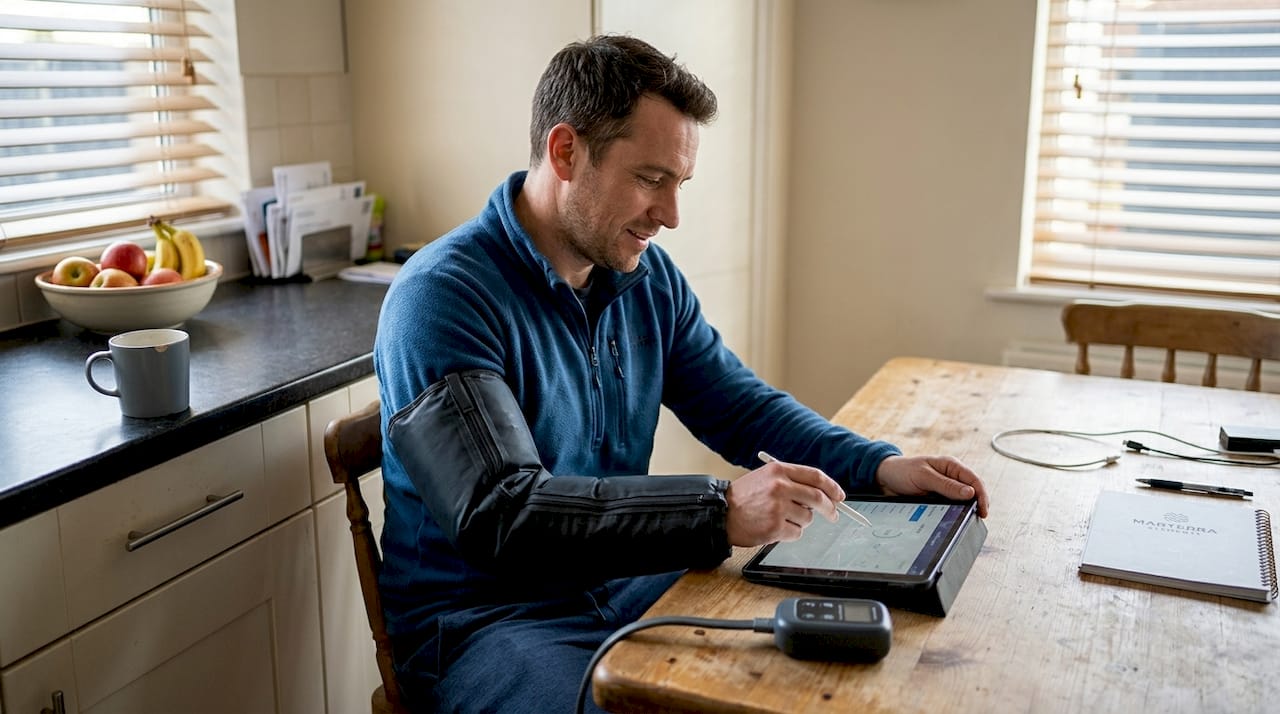
| Arm compression sleeves | 20 to 40 mmHg | 20 to 30 minutes | Upper body recovery, lymphatic support |
| Hip / glute attachments | 20 to 60 mmHg | 20 to 40 minutes | Lower back fatigue, hip tightness |
- Choose the right device for the target area — legs, arms, or hips
- Ensure a proper fit — graduated pressure only works when the garment sits correctly on the limb
- Start at the lowest pressure setting and increase gradually over multiple sessions
- Set a timer — most beginner sessions run 20 to 40 minutes
- Move gently during or after — light walking or ankle circles amplify circulation benefits
- Hydrate before and after — compression supports fluid movement, and hydration helps the process
For upper body recovery, the arm attachment and hips attachment extend your compression system beyond the legs, making full-body recovery more accessible at home.
What Most People Miss
Here's the honest take: compression therapy is a genuinely useful recovery tool — but it's frequently oversold. The wellness industry loves a device-driven solution, and compression boots look impressive. That visibility leads people to invest heavily in equipment while underinvesting in the basics that actually move the needle most.
Recovery benefits are consistent but modest. Compression does not outperform active recovery, massage, or a good night's sleep in most head-to-head comparisons. If your sleep is poor, your nutrition is inconsistent, and you're not moving enough between sessions, a compression device won't compensate for those gaps.
What compression does exceptionally well is lower the friction of recovery. It feels good, it's passive, and it fits easily into a routine. That perceptual benefit is real and worth respecting — feeling recovered influences behavior, and behavior drives long-term outcomes.
The smartest approach is to treat compression as one layer in a broader recovery stack. For those building a full recovery ecosystem, the Finnmark FD-3 full spectrum infrared sauna pairs powerfully with compression as part of a contrast or heat-based recovery protocol.
Compression enhances your recovery foundations. It doesn't replace them.
FAQ: Compression Therapy
How often should I use compression therapy at home?
Most users benefit from 20 to 60 minute sessions several times a week. Always follow your device's specific guidelines and adjust based on how your body responds — more frequent is not always better.
Is compression therapy safe for people with circulatory issues?
It is unsafe for those with severe arterial disease, untreated DVT, or decompensated heart failure. Anyone with moderate circulatory issues should use light pressure only or consult a medical professional before starting. When in doubt, get an ABI assessment first.
Does compression therapy boost athletic performance?
Compression may modestly improve agility and short-term anaerobic recovery, but a meta-analysis of 33 RCTs found no significant improvement in running endurance or race times. It is a recovery tool, not a performance enhancer for endurance sports.
Do the perceptual benefits of compression actually matter?
Yes. Users consistently report feeling lighter and less sore after sessions, and while endurance performance gains are limited, improved subjective recovery supports training consistency and quality of life — both of which drive long-term results.
What is the difference between static and pneumatic compression?
Static compression garments apply constant pressure and are best for mild soreness, travel, and everyday use. Pneumatic devices inflate and deflate in cycles, producing a more dynamic effect that research suggests is more effective for post-workout recovery and swelling reduction.
How does compression pair with other recovery modalities?
Compression pairs well with contrast therapy, infrared sauna, PEMF, and red light therapy. Sequencing compression after heat or cold exposure amplifies circulation benefits. See the contrast therapy protocol guide for sequencing recommendations.
Build Your Home Recovery Stack
Browse the full compression collection — pneumatic boots, arm and hip attachments, and cordless devices designed for everyday recovery.
Sources
- PMC, 2025. Pneumatic vs. static compression for recovery: swelling reduction and DOMS outcomes. pmc.ncbi.nlm.nih.gov
- PMC, 2025. Meta-analysis of 33 RCTs: compression garments and running endurance performance. pmc.ncbi.nlm.nih.gov
- Philadelphia Wound Care. Contraindications for compression therapy: ABI thresholds and safety guidelines. philadelphiawoundcare.com
- LymphFusion. Compression garment fitting and pressure risks: ischemia and clinical guidance. lymphfusion.co.uk
This article is for informational purposes only and does not constitute medical advice. Always consult a qualified healthcare provider before beginning any new health practice, particularly if you have a pre-existing condition, are pregnant, or are currently taking medication.