

Copper Bowl Guide: Benefits, Uses, and Care Tips
At a Glance
- Copper bowls can improve egg-white foam stability because copper ions interact with egg-white proteins — particularly conalbumin
- Copper's thermal conductivity (392 W/mK vs stainless steel's 16 W/mK) makes tin-lined copper pots and pans exceptionally precise on the stovetop — bowls are not heated, but the same material properties define why copper is unmatched in professional kitchens [1]
- Use lined copper bowls for acidic foods; reserve unlined copper for egg whites and other non-acidic tasks
- Sertodo copper bowls use a tin lining — inspect it regularly and have it re-tinned by a professional when it shows significant wear
- Hand wash, dry immediately, and polish regularly — the complete maintenance routine takes minutes and extends the life of your bowl by decades
- Copper earns its place in specific, technique-critical tasks — meringues, whipped cream, tempered chocolate, custards. For everyday mixing, stainless steel is sufficient.
Not all mixing bowls are created equal, and if you've ever wondered why professional pastry chefs reach for copper, the answer goes deeper than aesthetics. Copper bowls interact chemically with egg whites — copper ions bind with conalbumin to stabilize foam and can meaningfully improve volume and structure compared to stainless steel.
Beyond that, copper brings high thermal conductivity that matters most for technique-driven recipes, and a craftsmanship that rewards proper care. This guide walks you through the real science, smart safety practices, and everything you need to choose and maintain a copper bowl that earns its place in your kitchen.
Why Copper Bowls Stand Out in the Kitchen
Copper has been a kitchen staple for centuries, and modern science confirms what experienced cooks have long known. The metal's unique chemistry and thermal behavior give it advantages that no other bowl material can fully replicate — in specific, well-defined tasks.
The Chemistry of Better Meringues
When you whip egg whites in a copper bowl, copper ions migrate into the mixture and bond with conalbumin, a protein in egg whites. This bond creates a more stable foam that holds its structure longer and resists overbeating. The result is a meringue with greater volume and a glossier finish. Research supports that copper bowls can improve foam stability and volume compared to stainless steel, though the exact improvement varies depending on technique, recipe, and whipping method.
Thermal Performance That Matters for Technique
Copper's high thermal conductivity makes tin-lined copper pots and pans — like Sertodo skillets and saucepans — exceptionally precise for technique-driven recipes. A few degrees makes the difference between a perfect ganache and a broken one, and copper responds faster than any other cookware material. Bowls are not used over direct heat, but this same thermal responsiveness is why copper as a material is so valued in professional kitchens [1][2].
- Classic French meringues and Swiss meringue buttercream
- Whipped cream — faster peaks with better stability
- Tempered chocolate for coating or molding
- Zabaglione and other egg-based foams
- Any preparation requiring rapid, even temperature response
| Feature | Copper Bowl | Stainless Steel Bowl |
|---|---|---|
| Copper material conductivity* | 392 W/mK | 16 W/mK |
| Foam stability with egg whites | Improved (copper-conalbumin bond) | Baseline |
| Reactivity with egg whites | High (beneficial) | None |
| Reactivity with acidic foods | High (use tin-lined) | Minimal |
| Maintenance level | Moderate | Low |
*Copper's conductivity applies to tin-lined pots and pans used on the stovetop. Copper bowls are not heated — this figure reflects the material property that makes copper cookware superior for temperature-sensitive cooking.
Copper Bowl Safety: What Every Cook Should Know
Copper is reactive, and that reactivity is both its greatest strength and the reason you need to pay attention to what goes inside it.
Why Copper Reactivity Matters
Copper reacts with acidic ingredients — tomatoes, citrus juice, vinegar. When acid meets unlined copper, it can leach copper ions into your food at levels that affect both taste and safety. A tin lining, as used in Sertodo copper bowls, eliminates this risk entirely and makes the bowl safe for a broader range of tasks.
When Unlined Copper Is Safe
Unlined copper bowls are appropriate for one task: whipping egg whites. The copper-conalbumin reaction is beneficial, and the small amount of copper that transfers is within safe dietary ranges. Outside of egg white applications, unlined copper should stay away from anything acidic or highly salted — and unlined copper bowls must never be heated. Direct heat on an unlined copper bowl is a safety risk and will damage the bowl [2].
| Use Case | Unlined Copper | Tin-Lined Copper (Sertodo) |
|---|---|---|
| Whipping egg whites | Ideal | Works, but loses the chemical benefit |
| Acidic foods (tomatoes, citrus) | Avoid | Safe |
| Everyday mixing | Use with caution | Recommended |
| Cooking on direct heat | Never — unlined copper bowls must not be heated | Tin-lined pots & pans only (not bowls) |
Think of unlined copper bowls as a single-task specialist: egg whites only, never heated. Tin-lined copper pots and pans are where copper's thermal superiority fully applies — and where Sertodo's craftsmanship makes the greatest difference on the stove.
- Never heat an unlined copper bowl — direct heat is unsafe and will damage it
- Never use unlined copper bowls with acidic ingredients
- Inspect the tin lining regularly for chips, scratches, or worn spots
- Avoid storing food in copper bowls for extended periods
- Do not use copper bowls in the microwave
- Have the bowl re-tinned professionally when the lining shows significant wear
Caring for Your Copper Bowl: Maintenance Made Simple
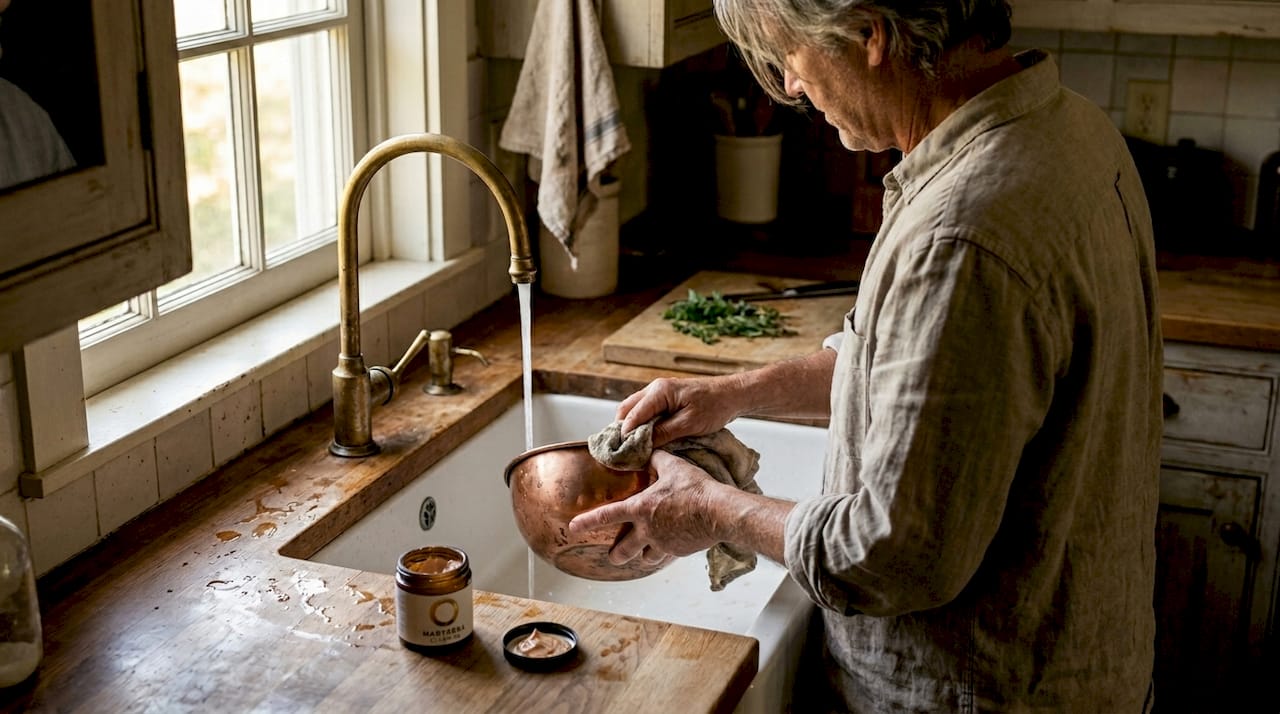
Proper maintenance is not complicated, but skipping it leads to tarnish, reduced performance, and a shorter lifespan for a tool that should last decades with the right care.
Why Maintenance Matters
Copper naturally oxidizes, forming a dark patina over time. While patina does not affect safety, heavy oxidation can reduce the metal's thermal responsiveness and make the bowl harder to clean. Regular care keeps copper bright and performing at its best.
- Rinse the bowl immediately after use with warm water
- Wash by hand using mild dish soap and a soft cloth or sponge
- Rinse thoroughly and dry completely with a clean towel right away — never air dry copper, as water spots and oxidation form quickly
- For tarnish, apply a paste of equal parts lemon juice and salt, rub gently in circular motions, then rinse and dry
- Buff with a soft, dry cloth to restore shine
Top maintenance mistakes to avoid:
- Putting copper in the dishwasher — heat and detergents strip the finish and damage the tin lining
- Using abrasive scrubbers — steel wool and harsh pads scratch both the copper and the tin interior
- Storing damp — moisture accelerates oxidation and can cause pitting
- Ignoring the tin lining — a damaged lining is a safety issue, not just cosmetic
- Using harsh chemical cleaners — bleach and ammonia-based products damage copper permanently
Choosing the Right Copper Bowl for Your Kitchen
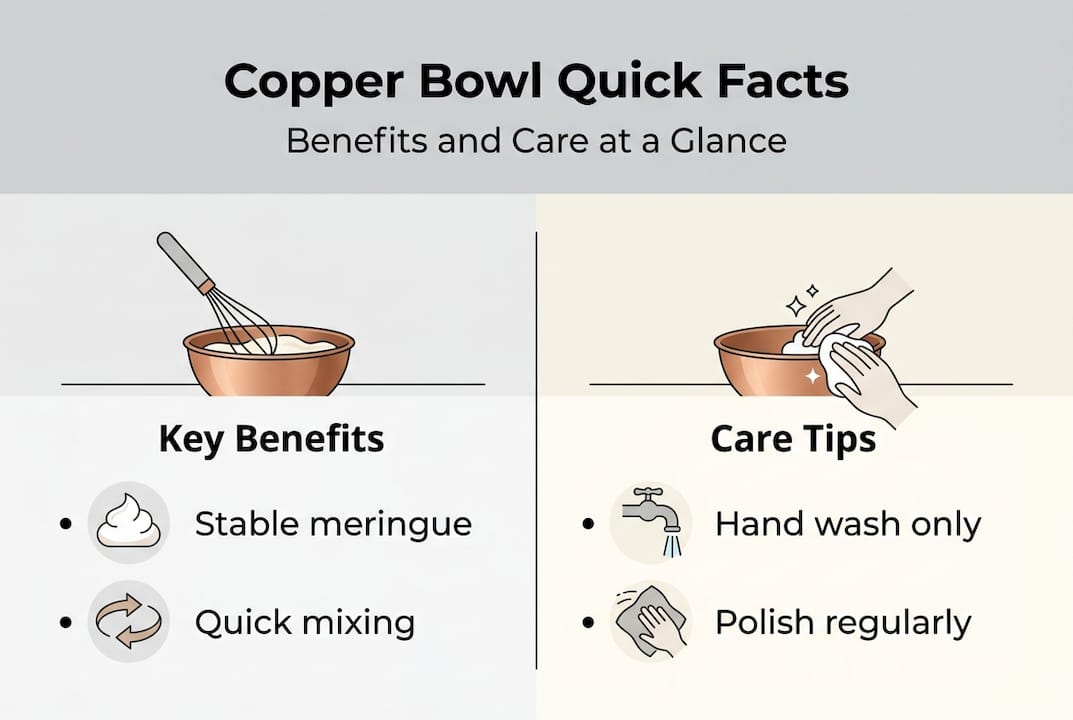
Thickness and Performance
Thicker copper improves evenness but reduces thermal responsiveness. For mixing bowls used primarily for egg whites, a medium gauge (around 2 to 2.5mm) gives you the chemical benefits without being unnecessarily heavy. Sertodo copper bowls are handcrafted to this standard — built for real kitchen performance, not just display.
Tin-Lined vs. Unlined: Choosing Intentionally
For most home cooks, a tin-lined copper bowl is the smarter choice. It handles a broader range of tasks safely and requires less vigilance about what goes inside. Unlined copper is best reserved for dedicated egg white work, where its chemical advantage is most pronounced. All Sertodo bowls available through Marterra use a tin lining for this reason.
Best for Copper
Meringues and soufflé bases · Whipped cream · Hollandaise and béarnaise · Zabaglione and custards · Any foam or emulsion requiring stability and volume
Better for Stainless
Everyday batter mixing · Salad tossing · Prep and ingredient staging · Anything acidic in an unlined bowl · Tasks where maintenance overhead outweighs the precision benefit
Size Guide
A 5-quart bowl suits most home recipes. Larger 7 to 8-quart options work better for batch baking. If using a stand mixer, confirm the bowl fits your model before purchasing.
Handle and Shape
Round-bottomed bowls are traditional for hand whisking. Flat-bottomed versions sit more stably on countertops. Handle design matters during extended whisking — try before you commit if possible.
The Overlooked Truth: When Copper Bowls Really Matter
Copper bowls are genuinely exceptional tools — but their advantages are concentrated in a specific set of tasks. The honest truth is that most home cooks will get the greatest return from copper when making meringues, whipping cream to precise peaks, or tempering chocolate. In those moments, copper is not just better. It changes what's possible.
For everyday tasks like mixing batter, tossing salads, or prepping ingredients, stainless steel is often sufficient and far easier to maintain. Investing in copper across your entire kitchen without understanding where it shines is where marketing often outpaces practicality.
The smarter approach is to own one or two well-made copper pieces, care for them properly, and deploy them where their chemistry and thermal precision actually matter. That targeted investment pays off every time you achieve a perfect meringue or a flawlessly tempered ganache.
The Sertodo Copper Mixing Bowls are handcrafted for serious home cooks who want the real chemical and thermal benefits copper delivers — with a tin lining that makes them safe for a wider range of tasks. For a complete copper kitchen setup, explore the Grand Copper Kitchen Caboodle.
Reserve your copper bowl for technique-critical recipes. Use stainless for everything else. You'll protect your investment and notice the difference exactly when it counts.
FAQ: Copper Bowls
Are copper bowls safe for all recipes?
Copper bowls are well-suited for whipping egg whites and foam-based preparations. Unlined copper with acidic foods can cause leaching and a metallic flavor — always use a tin-lined bowl for acidic ingredients. Sertodo bowls come tin-lined for this reason.
What foods should not be prepared in an unlined copper bowl?
Avoid using unlined copper bowls with acidic foods like tomatoes, citrus juice, and vinegar. The acid reacts with copper and can affect both flavor and safety. Use a tin-lined bowl for these tasks.
How do I clean a copper bowl to keep it shiny?
Hand wash with mild soap, dry immediately with a clean towel, and polish with a lemon and salt paste for tarnish. Never put copper in the dishwasher, and never air dry it. Consistent care takes minutes and keeps the bowl performing for decades.
Why do professional chefs use copper bowls for meringues?
Copper ions interact with conalbumin in egg whites to form a more stable foam that holds structure longer and resists overbeating. The result is a more reliable meringue with better texture. This is the primary and most well-supported benefit of copper mixing bowls.
How do I know when my tin lining needs re-tinning?
Look for gray or dark streaks inside the bowl that won't polish away, pitting, rough patches, or any visible base metal showing through. When the lining is compromised, stop using the bowl for food preparation and contact a professional re-tinning service.
Is the Sertodo copper bowl compatible with KitchenAid mixers?
Yes — the Sertodo Copper Mixing Bowl for KitchenAid Lift Stand Mixers is designed specifically for this purpose, giving you the chemical benefits of copper with the convenience of your stand mixer.
Upgrade Your Kitchen with Sertodo Copper
Handcrafted copper mixing bowls built for real performance — tin-lined, beautifully made, and designed to last a lifetime.
Sources
- Copper Development Association. Thermal conductivity of copper and common alloys: 392 W/mK for pure copper vs. 16 W/mK for stainless steel. cda.copper.org
- McGee H. On Food and Cooking: The Science and Lore of the Kitchen. Scribner, 2004. Copper-conalbumin interaction in egg white foams; copper bowl safety and heating guidelines.
- US Food and Drug Administration. Guidance on copper cookware safety, leaching thresholds in acidic foods, and safe use of unlined copper. fda.gov
- Sertodo Copper. Product specifications and use guidelines for tin-lined copper cookware and mixing bowls. sertodo.com
This article is for informational purposes only. Always follow manufacturer guidelines for cookware use and maintenance. If your tin lining shows significant wear, discontinue use and consult a professional re-tinning service.