

Electric vs Wood Sauna Heater: The Complete Home Buyer's Guide
At a Glance
- Your heater choice shapes heat-up time, installation cost, weekly maintenance, and the entire sensory experience — it is not a minor detail
- Electric heaters offer precise control, indoor compatibility, and consistent low-friction sessions — best for daily recovery routines
- Wood heaters can reach very high temperatures — often above 200°F, with some units capable of higher peaks depending on setup — plus richer radiant heat and an immersive ritual
- Electric typically costs $0.68–$1.50 per session; purchased firewood runs $2.50–$3.50 — a meaningful gap at 4+ sessions per week
- Wood heaters carry real safety risks (CO, fire, chimney maintenance) — many jurisdictions restrict them to outdoor use, but requirements vary; always verify locally
- The best heater is the one you will use consistently — frequency drives long-term wellness outcomes more than any technical specification
Many homeowners assume that once they've decided to add a sauna, the heater is just a detail. It isn't. The choice between an electric and a wood sauna heater shapes nearly every aspect of your experience — from how long you wait before stepping inside to how deeply you relax once you're there. It affects your installation budget, your weekly maintenance routine, your energy bill, and whether your sauna fits inside your home at all.
Understanding these differences before you buy saves you from costly regrets and puts you in a position to build a recovery space that genuinely works for your life.
How Electric and Wood Sauna Heaters Work
Electric sauna heaters use resistive heating elements to warm a bed of stones, delivering even, consistent convective and radiant heat with precise thermostat control — typically reaching 160 to 200°F. You set your target temperature, press a button, and the heater does the rest. No fire to manage, no fuel to source. This predictability makes electric heaters the natural choice for saunas built around consistent daily recovery routines.
Wood sauna heaters operate on an entirely different principle. They burn seasoned hardwood in a firebox to heat a large mass of stones — typically 70 to 200 lbs — delivering radiant, fluctuating heat that feels deeper and more authentic. Some wood heaters can theoretically reach up to 240°F, though that is well above the range most users find comfortable or necessary. The fire crackles. The wood releases aromatic compounds. The heat rises and falls in gentle waves rather than holding a flat line. That sensory dimension — the sound, the smell, the ritual of building and tending a fire — is something no electric element can replicate.
Electric Heater Highlights
Precise digital temperature control · Consistent, repeatable heat output · No smoke or combustion aroma · Quiet operation · Suitable for indoor installations
Wood Heater Highlights
Rich crackling sound and wood smoke aroma · Fluctuating, deeply radiant heat · Higher maximum temperatures · Ritualistic fire-building process · Strong connection to traditional Finnish sauna culture
"The sauna is not just a room. It is a ritual." This sentiment from traditional Finnish sauna culture captures why so many enthusiasts choose wood, even when electric is more convenient.
Performance, Heat-Up Times, and Authentic Sauna Experience
Both heater types can deliver a therapeutic sauna session, but they do it differently — and those differences matter depending on what you are optimizing for.
| Feature | Electric Heater | Wood Heater |
|---|---|---|
| Heat-up time | 30 to 60 minutes | 20 to 60 minutes |
| Max temperature | 160 to 200°F | Often above 200°F; some units capable of higher peaks depending on setup |
| Temperature control | Precise thermostat | Manual fire management |
| Steam (löyly) quality | Good, consistent | Exceptional, fluctuating |
| Sensory atmosphere | Clean, modern | Immersive, traditional |
| Repeatability | High | Variable |
Heat-up times vary more than most buyers expect. A 9.6kW electric heater typically takes 45 to 60 minutes to reach 200°F, while a well-managed wood fire can hit 220°F in as little as 30 minutes in ideal conditions — though 45 to 75 minutes is more realistic in practice.
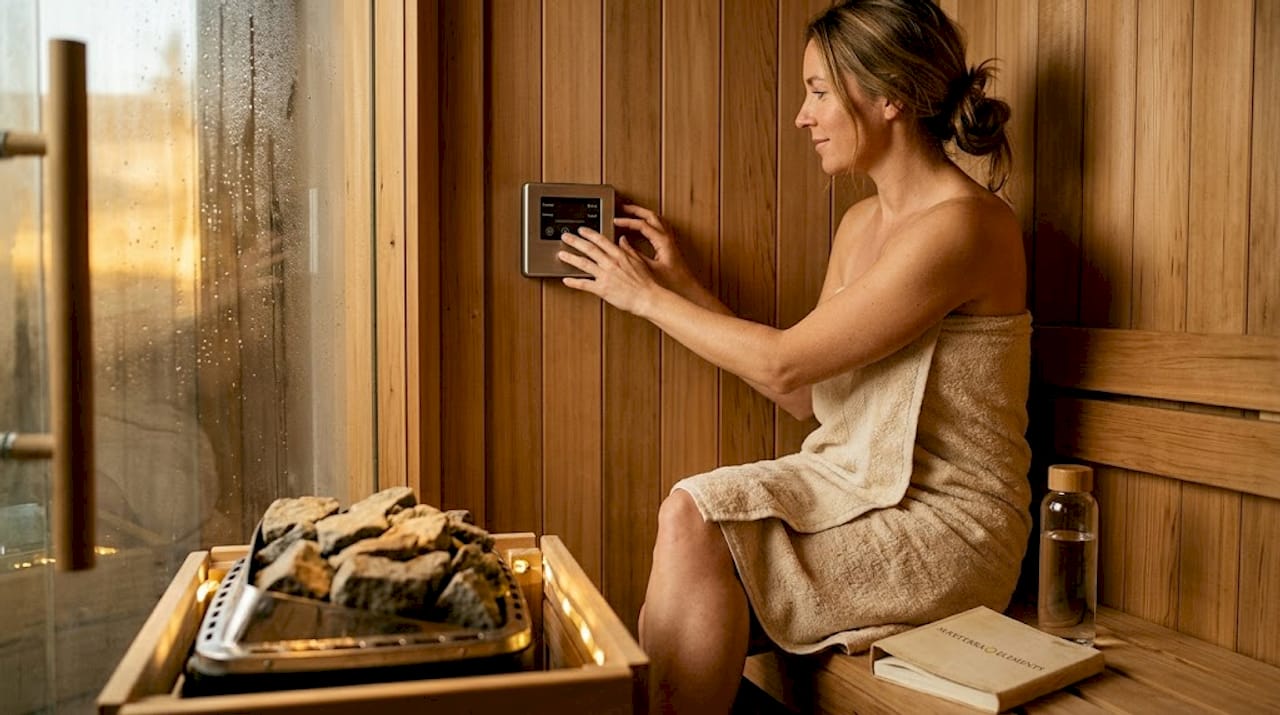
Where electric heaters truly excel is in löyly recovery — the ability of the stones to regenerate steam quickly after water is poured on them. Empirical benchmarks from ThermalFinn testing show that top electric models like the HUUM Drop achieve löyly recovery in as little as 3.8 minutes with stone temperatures reaching 380°C — critical for recovery-focused sessions where you want to control steam intensity precisely and repeatedly.
Wood heaters produce a steam quality that many describe as softer and more enveloping. The fluctuating heat creates a dynamic thermal environment that feels less clinical and more immersive. For people pursuing sauna longevity benefits, both heater types deliver meaningful cardiovascular and cellular stress responses — but the experience of getting there is quite different.
Installation, Maintenance, and Safety
Before you fall in love with either option, understand what it takes to install and maintain each one. These are not minor considerations — they can double your total investment and determine whether your heater is even permitted in your home.
Electric — Installation
Dedicated 240V electrical circuit required · Professional electrician typically costs $800 to $2,500 · No chimney, no hearth, no structural modifications · Minimal ongoing maintenance: wipe down elements, check stone condition annually
Wood — Installation
Chimney, hearth, and often structural wall penetrations required · Installation typically $2,000 to $5,000 including chimney · Annual chimney sweep to prevent creosote buildup · Regular ash removal after each session · Year-round firewood storage needed
Electric heaters carry significantly lower risk. Built-in overheat protection, no combustion gases, and no open flame make them far more suitable for indoor home installations — especially in homes with children or older adults. For those optimizing home sauna sessions around a daily wellness routine, the simplicity of electric installation and maintenance is a genuine advantage. You don't want ash removal and chimney scheduling to become friction in your recovery practice.
Ongoing Costs and Sustainability
The sticker price of the heater is just the beginning. Note that all cost figures below are estimates — electricity rates and firewood prices vary significantly by region, supplier, and season. What you spend over months and years depends on your energy source, how often you use your sauna, and whether you have access to affordable or self-sourced wood.
| Cost Factor | Electric Heater | Wood Heater |
|---|---|---|
| Average cost per session | $0.68 to $1.50 | $2.50 to $3.50 (purchased wood) |
| Annual cost (4x/week) | $141 to $312 | $520 to $728 |
| Energy source flexibility | Solar or grid | Firewood |
| Self-sourcing potential | Low | High |
| Carbon footprint | Low with clean energy | Variable (potentially neutral with sustainably sourced wood) |
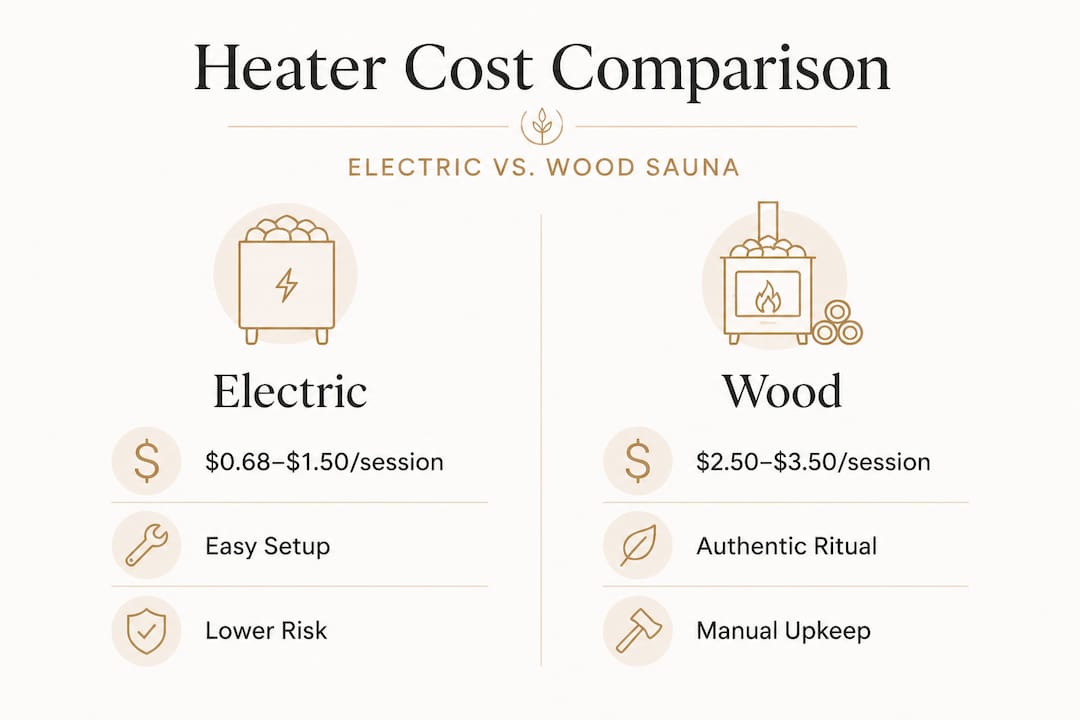
*Cost estimates based on US average electricity rates (~$0.15/kWh) and regional firewood prices. Actual costs vary significantly by location, energy source, and usage pattern.
The sustainability picture is more nuanced than it first appears. Electric heaters paired with solar panels or a clean energy grid can be genuinely low-carbon. Wood heaters burning locally sourced, sustainably harvested timber are often described as lower-carbon than fossil fuels — since the CO2 released was recently absorbed by the tree — though characterizing this as fully carbon-neutral depends on harvesting practices, transport, and methodology. Burning scrap wood or fallen timber makes the equation even more favorable.
Staying informed about sauna use trends shows that more homeowners are pairing electric saunas with renewable energy systems, making the cost and environmental case for electric even stronger as solar adoption grows.
Deciding What's Best for Your Wellness Goals
Neither choice is objectively superior. They serve different people with different wellness visions. Use this framework to match your heater to how you actually live.
Choose Electric If You…
Want a sauna inside your home, basement, or garage · Prioritize quick, repeatable sessions without setup time · Use your sauna for post-workout recovery or stress management · Have children where open fire risks are a concern · Want precise temperature control for protocol-based wellness · Are pairing your sauna with a cold plunge for contrast therapy
Choose Wood If You…
Have an outdoor sauna structure with proper chimney access · Love the ritual of fire-building as part of relaxation · Want higher potential temperatures and deeply radiant heat — noting that the most comfortable range for most users is well below the theoretical maximum · Have reliable access to affordable or self-sourced firewood · Value sensory immersion — crackle, aroma, and visual warmth of fire
Electric heaters are favored for convenience, consistency, and indoor use by health-conscious homeowners seeking frequent recovery sessions. Wood heaters are preferred by enthusiasts who seek authentic ritual, sensory immersion, and the deeply radiant heat that many describe as fuller and more relaxing. The best heater is the one you will actually use consistently — week after week, year after year. For those building a full indoor setup, the Finnmark FD-5 Trinity XL combines infrared, steam, and red light in one unit — a versatile electric-powered option for serious home wellness spaces. For those pairing sauna with cold plunge, the contrast therapy guide helps you structure that protocol effectively.
What Most Buyers Overlook
Most product comparisons focus on specs: kilowatts, temperatures, heat-up times. Those numbers matter, but they don't tell the full story of what it's like to own and use a sauna heater over the long term.
Here's what we see most often: buyers choose wood because they're drawn to the romance of it. The crackling fire, the ritual, the idea of a Finnish-style outdoor sauna on a winter evening. That vision is real and beautiful. But the reality of building a fire before every session, managing ash, scheduling chimney sweeps, and storing firewood through wet winters is a different experience entirely. For many people, those demands quietly erode the habit. The sauna gets used less. The recovery practice fades.
Electric heaters have a motivational advantage that rarely gets discussed. When the barrier to entry is pressing a button and waiting 45 minutes, you use your sauna more. Frequency is the single biggest driver of long-term wellness outcomes. A session you actually take beats a perfect session you skip because the fire felt like too much work on a Tuesday night.
That said, for some people the ritual of the wood fire is the point. It's meditative. It slows them down before they even enter the sauna. The act of building the fire is itself a form of stress reduction. If that resonates, don't let convenience arguments talk you out of it.
Think about sauna session timing in your real weekly schedule. If you're using your sauna three mornings before work, electric wins. If Saturday afternoons are your sacred recovery time and you enjoy the whole process, wood might be exactly right. Buy for your actual habits — not your aspirational ones.
Find the Right Sauna for Your Home
From versatile indoor electric models to full traditional outdoor setups — browse the Marterra Elements sauna collection.
FAQ: Electric vs Wood Sauna Heaters
How do electric sauna heaters achieve consistent temperatures?
Electric sauna heaters use built-in thermostats to automatically regulate heat output, maintaining your precise temperature setting throughout the entire session without any manual adjustment.
Are wood sauna heaters safe to use indoors?
Most wood sauna heaters require dedicated chimneys and proper ventilation. Fire and CO risks mean many jurisdictions restrict them to outdoor installations only — requirements vary, so always verify with your local building authority before purchasing.
Which sauna heater has lower operating costs?
These figures are estimates based on US average rates — actual costs vary by region and usage. Electric heaters typically run $0.68 to $1.50 per session versus $2.50 to $3.50 for purchased firewood, though wood costs drop significantly if you source your own supply. At four sessions per week, the annual saving with electric may be several hundred dollars depending on your local electricity and firewood prices.
Which type of heater is best for cold plunge contrast therapy?
Electric heaters are generally better suited for contrast therapy because top models excel in rapid löyly recovery and precise temperature control, making back-to-back sauna-plunge cycles easier to manage consistently.
Do wood-fired heaters feel hotter during use?
Wood sauna heaters can reach very high temperatures — often above 200°F, with some units theoretically capable of higher peaks depending on setup. That said, temperatures above 200°F are well above the range most users find comfortable or necessary. The radiant heat quality many users describe as deeper and more enveloping, and the fluctuating nature of wood heat creates a more dynamic thermal environment than electric alternatives.
Recommended
- Home Sauna Trends 2026: Benefits, Science & Longevity Guide – Marterra Elements
- How to Optimize Your Home Sauna Sessions for Maximum Health Benefits – Marterra Elements
- Sauna for Longevity in 2026: Science-Backed Protocols & Best Home Models – Marterra Elements
- Revive 2-Person Traditional Sauna Package | 3.5kW Harvia WiFi Bluetooth – Marterra Elements
- Revive Traditional Sauna & Cold Plunge Bundle – Marterra Elements
Sources
- Kummer M. "Wood vs Electric Sauna Heaters." michaelkummer.com
- ThermalFinn. "Sauna Heater Benchmarks: Löyly Recovery and Stone Temperature Testing." thermalfinn.com
- Finnish Sauna Society. Traditional sauna culture, ritual, and heater guidance. sauna.fi
This article is for informational purposes only. Always consult a licensed electrician and check local building codes before installing any sauna heater. Wood heater installations require professional assessment of ventilation, chimney safety, and fire risk.