

Powerful Health Benefits of Hot Tubs for Home Wellness
At a Glance
- Regular hot tub use may temporarily lower blood pressure, support relaxation and sleep, and ease muscle and joint discomfort — benefits depend on safe use, individual health status, and realistic expectations
- Consistent sessions may support heart health by temporarily improving circulation and reducing blood pressure — this is not a substitute for medical treatment
- Pre-bed soaking (60–90 minutes before sleep) may improve sleep efficiency by supporting the body's natural temperature-cooling mechanism
- Buoyancy reduces joint load significantly — making movement easier and less painful for those with arthritis or musculoskeletal issues
- Repeated heat exposure may improve vascular function in some people — individual results vary and evidence for long-term adaptation is still developing
- People with cardiovascular conditions, low blood pressure, or who are pregnant should consult a healthcare provider before use
Most people think of a hot tub as a weekend luxury — something you enjoy at a resort or a friend's backyard. But modern research tells a more interesting story. Regular hot tub use may produce measurable improvements in blood pressure, sleep quality, muscle recovery, and stress resilience in some people.
These benefits are real, but they depend on safe use, individual health status, and realistic expectations about what heat therapy can and cannot do. This guide covers what the evidence actually supports, where claims should be taken with caution, and how to use a hot tub safely and effectively as part of a home wellness routine.
Lower Blood Pressure and Support Heart Health
One of the more compelling documented benefits of hot tub use is its potential effect on blood pressure. When you immerse your body in hot water, blood vessels dilate, heart rate increases slightly, and circulation improves. Repeated heat exposure may improve vascular function in some people — though individual results vary and evidence for long-term arterial adaptation is still developing.
Research suggests that consistent passive heat therapy sessions may reduce systolic blood pressure by approximately 10 mmHg after 30 sessions in some individuals — a potentially meaningful reduction for those managing mild hypertension. This benefit is particularly relevant for people who struggle to achieve similar results through conventional physical activity due to chronic pain, injury, or age-related limitations. For more on how home spa use relates to hypertension risk, the research breakdown is worth reading alongside this guide.
| Metric | Before Sessions | After 30 Sessions (study context) |
|---|---|---|
| Systolic blood pressure | Elevated baseline | ~10 mmHg reduction in some participants |
| Vascular function | Reduced | May improve with repeated exposure |
| Blood flow efficiency | Moderate | Improved circulation during and after sessions |
- May reduce arterial stiffness over time, which could lower the workload on the heart
- May support endothelial function — the inner lining of blood vessels that helps regulate pressure
- Improves peripheral circulation during sessions, especially in the hands and feet
- Resting heart rate may decrease over time with regular sessions in some individuals
Enhance Sleep Quality and Reduce Stress
There is a reason a warm bath before bed feels so effective. It is not just psychological comfort. When you exit a hot tub, your core temperature drops, which may help support the natural thermal shift your body uses to transition into deeper sleep stages.
Studies show that pre-bed hot bathing may improve sleep efficiency and reduce the odds of poor sleep quality in some adults — particularly older individuals. Specific improvements reported include reduced time awake after initially falling asleep and improved subjective sleep satisfaction. Learning how to improve sleep and reduce stress with heat therapy can set the foundation for a more consistent recovery routine.
"Warm water immersion before bed may support the body's natural sleep-onset cooling mechanism — making it one of the more underrated sleep hygiene tools available for those who respond well to it."
Stress reduction works through a parallel channel. Hot water immersion may activate the parasympathetic nervous system — often called the rest and digest mode — which counters the chronic stress response many people carry throughout the day. Hydrotherapy may also support reduced stress hormone levels and endorphin release, creating a calming physiological shift that can last beyond your session.
Evening Routine for Sleep Support
- Enter the hot tub 60 to 90 minutes before your target bedtime
- Keep water temperature between 100°F and 104°F
- Spend 15 to 20 minutes soaking without screens or stimulating conversation
- Exit slowly and allow your body to cool naturally before lying down
- Combine with other restful routines: dim lights and limit caffeine after midday
Soothe Muscles and Support Joint Health
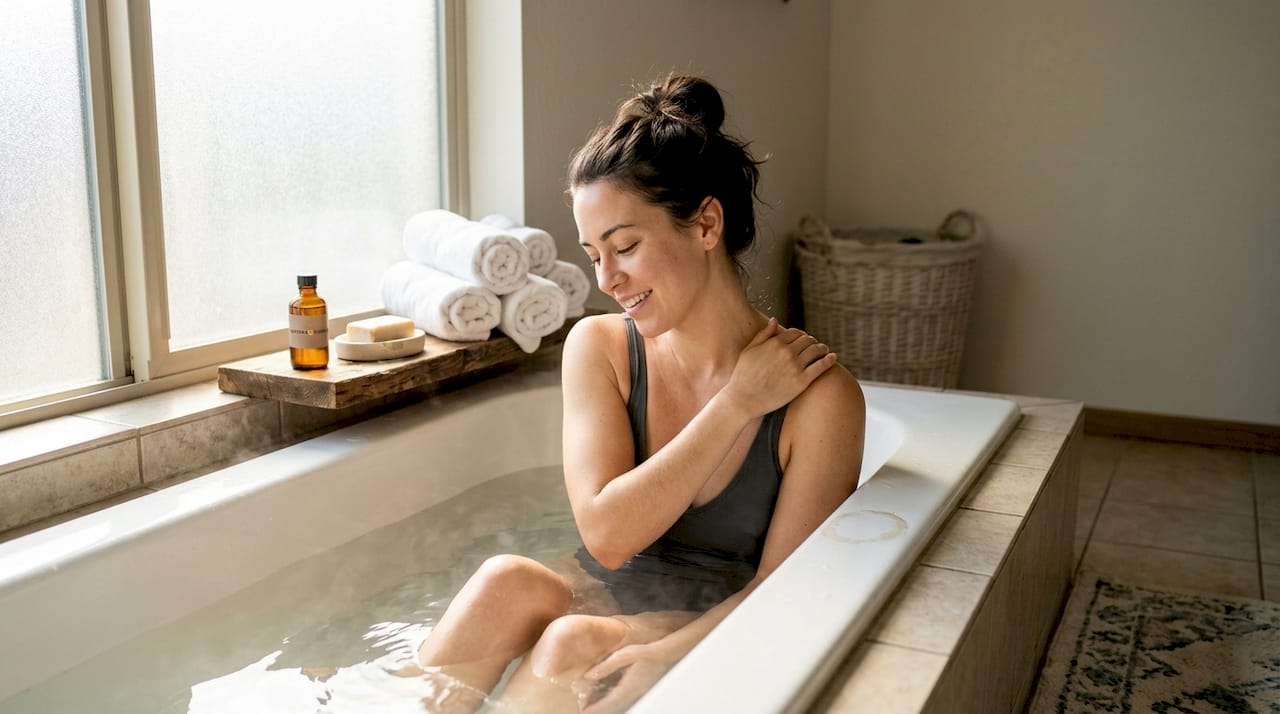
If your body carries tension from long workdays, chronic stiffness, or previous injuries, a hot tub offers physical relief through three simultaneous mechanisms: heat, hydrostatic pressure, and jet massage.
Buoyancy reduces joint load significantly — commonly cited in hydrotherapy literature as reducing effective body weight in water — making movement easier and less painful for those with arthritis or musculoskeletal issues. Jets add a massage layer that targets specific muscle groups. For those managing muscle recovery approaches, heat and buoyancy together create a restorative environment that passive stretching alone cannot replicate.
- May help reduce perceived soreness and improve recovery comfort after physical activity
- Improved range of motion through heat-induced flexibility in soft tissue
- May decrease joint discomfort in conditions like osteoarthritis through buoyancy and warmth
- Targeted jet pressure on the lower back, shoulders, and hips
- May support endorphin release during immersion, providing natural pain relief for both acute soreness and chronic discomfort
| Feature | Hot Tub | Sauna |
|---|---|---|
| Joint pressure relief | High (buoyancy) | None |
| Muscle tension relief | High (jets + heat) | Moderate (heat only) |
| Circulation support | High | High |
| Targeted massage | Yes (adjustable jets) | No |
| Whole-body immersion | Yes | No |
Boost Physical Performance and Recovery
Heat acclimation is a proven performance tool used by elite athletes, and regular hot water immersion at home can support some of the same physiological responses. Research suggests that repeated hot water immersion sessions may increase plasma volume, improve thermoregulation, and produce cardiovascular adaptations that support exercise efficiency — though the degree of benefit varies by individual, duration, and protocol.
For people managing chronic illness or rehabilitating from injury, heat therapy may replicate some cardiovascular and musculoskeletal effects of light exercise, making it a meaningful complement for those who cannot exercise at full intensity. It is not a substitute for movement, but it may bridge a meaningful gap. For more structured approaches, exploring workout recovery strategies alongside hot tub use can help you build a layered system.
- May support increased blood plasma volume, improving oxygen delivery to muscles during subsequent exercise
- May reduce perceived exertion during physical activity following regular heat exposure
- Faster post-exercise recovery comfort when used as a cooldown tool
- Improved muscle pliability before gentle movement or mobility work
- May improve heat tolerance over time, reducing fatigue risk during outdoor activity
Safety Tips and Who Should Avoid Hot Tubs
Hot tubs are effective recovery tools that require responsible use. Knowing when to use them and when to hold back is part of getting the most from your routine.
Session Guidelines
Keep water at or below 104°F (40°C). For new users, starting with 15-minute sessions is prudent — healthy adults may tolerate longer sessions, but hydration, dizziness risk, and individual tolerance should guide duration. Always enter and exit slowly. Drink water before and after every session.
Who Should Consult a Doctor First
People with cardiovascular conditions or low blood pressure — heat lowers blood pressure and creates vascular demands that may be harder to tolerate · Pregnant individuals — overheating is the primary concern, avoid unless cleared by a clinician · Children under 5 · Anyone on medications affecting circulation.
Also Avoid If You Have
Open wounds, skin infections, or rashes · Active heart conditions without medical clearance · Never use a hot tub after consuming alcohol — the combination of vasodilation and sedation significantly increases risk of dizziness and falls.
Water Hygiene
Test pH, alkalinity, and sanitizer levels regularly. Shock the water weekly. Bacteria like Pseudomonas aeruginosa thrive in poorly maintained hot tubs and can cause skin infections and respiratory issues — water chemistry is not optional maintenance.
For those integrating hot tubs with cold exposure, reviewing contrast therapy guidance is a smart step. Pairing heat and cold requires careful sequencing — particularly for people managing cardiac conditions.
Why Most People Underestimate the Wellness Power of Hot Tubs
There is a consistent pattern in how homeowners approach their wellness setups: many invest in saunas and cold plunges without seriously considering a hot tub as part of the stack. The perception is that hot tubs are recreational, not therapeutic. That gap between perception and reality is worth closing.
The evidence supports hot tubs as a complement to other recovery tools in several domains — joint care, blood pressure support, and sleep optimization in particular. Yet they remain underutilized for daily stress relief and recovery, partly because they are marketed as entertainment purchases rather than recovery equipment.
Treating a hot tub as recovery infrastructure — alongside cold plunges and wellness technology trends — is how the most health-intentional households are now building their routines. The science supports a meaningful role. The only thing missing is the reframe.
Our wellness philosophy centers on heat, cold, movement, and recovery working together. Explore the Finnmark FD-5 Trinity XL infrared sauna to complement your hot tub routine, or shop the full recovery collection at Marterra Elements.
FAQ: Hot Tub Health Benefits
How often should you use a hot tub for health benefits?
Regular sessions 3 to 5 times per week, lasting 10 to 30 minutes each, are associated with cardiovascular and relaxation benefits in the available research, while remaining safe for most healthy adults. Individual tolerance varies — start conservatively and build up.
Can hot tubs help with arthritis or joint pain?
Hot tubs may ease joint discomfort by improving local circulation and reducing effective body weight through buoyancy — making movement less painful. Hydrostatic pressure and heat make them a commonly recommended hydrotherapy option for arthritis relief, though individual response varies.
Are hot tubs safe during pregnancy?
Pregnant individuals should consult a healthcare provider before use. Overheating is the primary concern, with established contraindications for sustained heat exposure during pregnancy. A clinician can advise based on individual circumstances.
Do hot tubs improve sleep quality?
Evidence suggests that pre-bed hot tub sessions may boost sleep efficiency and reduce time awake after initially falling asleep — particularly in older adults. The mechanism is related to the body's post-immersion temperature drop, which may support natural sleep-onset cooling.
What precautions should I take before using a hot tub?
Keep water at or below 104°F, stay hydrated, and avoid use after alcohol or if you have open wounds, cardiovascular conditions, or low blood pressure. For new users, starting with shorter sessions (around 15 minutes) and assessing your response before extending duration is a sensible approach.
How does a hot tub compare to a sauna for recovery?
Both deliver significant circulation and relaxation benefits. Hot tubs have an advantage for joint care — buoyancy reduces joint load in ways a sauna cannot replicate, and jet massage adds targeted pressure. Saunas tend to reach higher temperatures and may be more effective for heat acclimation protocols. Many wellness-focused households use both as complementary tools.
Build Your Home Wellness Stack
From infrared saunas to cold plunges and recovery tools — browse the full Marterra Elements collection.
Recommended
- Home Spa Health Benefits: The Science Behind a 47% Lower Hypertension Risk – Marterra Elements
- How to Optimize Your Home Sauna Sessions for Maximum Health Benefits – Marterra Elements
- Essential Elements of a Premium Home Spa: Design, Materials & Technology – Marterra Elements
- Home Sauna Trends 2026: Benefits, Science & Longevity Guide – Marterra Elements
Sources
- Brunt VE, et al. "Passive heat therapy with hot water immersion induces similar whole-body physiological adaptations to aerobic exercise training in humans." Journal of Applied Physiology, 2016. journals.physiology.org
- Haghayegh S, et al. "Before-bedtime passive body heating by warm shower or bath to improve sleep: A systematic review and meta-analysis." Sleep Medicine Reviews, 2019. sciencedirect.com
- Becker BE. "Aquatic therapy: scientific foundations and clinical rehabilitation applications." PM&R, 2009. Joint load and buoyancy in hydrotherapy. pmrjournal.org
- Leung AAM, et al. "Passive heating for cardiovascular health: Current evidence and future directions." Journal of Physiology, 2022. physoc.onlinelibrary.wiley.com
This article is for informational purposes only and does not constitute medical advice. Hot tub use is not a substitute for medical treatment. Always consult a qualified healthcare provider before starting any new heat therapy practice, particularly if you have cardiovascular disease, low blood pressure, are pregnant, or are managing a chronic health condition.