

Home Workouts for Menopause: Symptom Relief & Wellness Guide
At a Glance
- Resistance and aerobic exercise are among the most evidence-supported tools for managing menopause wellness — muscle loss, bone density, and mood respond well to consistent movement; hot-flash effects are more variable
- Aerobic activity at moderate intensity (150 minutes per week) is associated with improvements in sleep and mood — effects on hot flashes are less consistent and vary by individual
- 2 to 3 strength sessions per week can produce meaningful improvements in hip strength, balance, and flexibility within 8 to 12 weeks
- Yoga and walking are valuable — but neither alone provides the mechanical loading bones and muscles need to stay strong through menopause
- Consistency beats intensity: gradual, ongoing routines deliver more sustained benefit than occasional high-intensity programs
- Recovery tools like infrared sauna and cold therapy support sleep quality and muscle recovery between sessions
Menopause is not a signal to slow down. Strength training with resistance bands or light dumbbells is one of the most evidence-supported tools available for countering muscle loss, bone density decline, and the mood disruptions that accompany hormonal change. Yet many women pull back from exercise during this transition, unsure what is safe or effective.
This guide cuts through that uncertainty with practical, science-backed home workout strategies relevant to menopause. Whether you are in perimenopause or years past your last period, consistent movement at home is associated with meaningful improvements in energy, strength, and overall wellbeing — with some benefit to specific symptoms depending on individual circumstances.
Why Exercise Is Crucial During Menopause
Menopause brings a sharp drop in estrogen, and that hormonal shift triggers a cascade of physical changes. Muscle mass declines faster, bone density erodes, cardiovascular risk rises, and the nervous system becomes more reactive. Hot flashes, disrupted sleep, and mood swings are not just inconveniences — they reflect real physiological stress that exercise is uniquely positioned to address.
Resistance exercise stimulates bone remodeling, directly countering osteoporosis risk. Aerobic activity improves heart rate variability and vascular function. Both forms of movement support serotonin production and cortisol regulation, which contributes to better sleep and emotional stability. Paying attention to the wellness pillars of heat, movement, nourishment, and recovery gives you a complete framework for managing this transition. Pairing exercise with essential foods for menopause relief amplifies results further, because nutrition and movement work together to regulate hormones and body composition.
| Menopause Symptom | How Exercise May Help |
|---|---|
| Hot flashes (vasomotor symptoms) | May help some women — effects on vasomotor symptoms are mixed in research; sleep and mood benefits are more consistent |
| Poor sleep | Regular movement associated with improved sleep onset and quality |
| Mood swings and anxiety | Exercise supports serotonin production and lowers cortisol |
| Muscle loss (sarcopenia) | Resistance training preserves and rebuilds muscle tissue |
| Bone density loss | Weight-bearing exercise stimulates bone remodeling |
| Weight gain | Combined cardio and strength supports metabolic rate |
| Joint stiffness | Flexibility and mobility work maintains range of motion |
Aerobic exercise at moderate intensity — such as brisk walking, dancing, or cycling for 150 minutes per week — is associated with improvements in sleep quality and mood. Effects on vasomotor symptoms like hot flashes are more variable and may differ by individual. Research supports 2 to 3 strength sessions per week as a foundation for muscle and bone health, with measurable gains in strength and balance developing over several weeks of consistent training.
"Exercise is not just a lifestyle add-on during menopause. It is infrastructure for daily recovery, hormonal balance, and long-term resilience."
Core Workout Types: Strength, Aerobic, and Flexibility
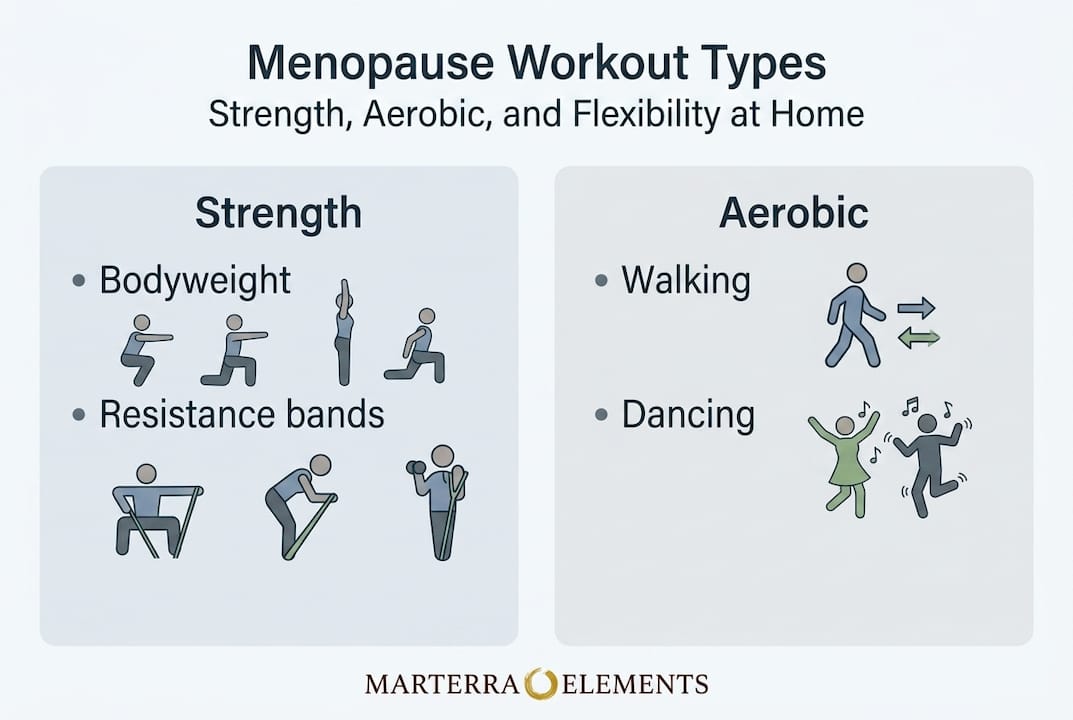
Three categories of exercise form the foundation of an effective menopause fitness plan. Each targets different symptoms, and the real benefit comes from combining all three.

Strength Training
Strength training is the cornerstone. Using bodyweight, resistance bands, or light dumbbells, you can stimulate the muscle and bone adaptations that estrogen decline suppresses. Research suggests that combined aerobic and resistance training delivers better overall control of vasomotor symptoms than either approach alone. You do not need a gym — a set of resistance bands and a yoga mat are enough to start. Explore strength training tools for home use if you want to build a more complete setup.
Aerobic Exercise
Aerobic exercise keeps your heart healthy and mood stable. Brisk walking, dancing, jump rope, and low-impact cycling all count. These activities support lower blood pressure, improved insulin sensitivity, and may reduce hot flash frequency over time. Even home-based resistance exercises that elevate heart rate contribute to cardiovascular and hormonal benefits in postmenopausal women.
Flexibility and Mobility
Yoga, dynamic stretching, and targeted mobility sequences improve joint range of motion, reduce stiffness, and support faster recovery between strength sessions. This category is undervalued — and increasingly important after 50, when connective tissue loses elasticity and recovery takes longer.
| Exercise Type | Key Benefits | Best For |
|---|---|---|
| Strength training | Muscle, bone density, balance, flexibility | Sarcopenia, osteoporosis, metabolic health |
| Aerobic exercise | Heart health, mood, vasomotor symptoms | Hot flashes, sleep, weight management |
| Flexibility/mobility | Recovery, range of motion, joint health | Stiffness, injury prevention, stress relief |
- Start each session with 5 minutes of light movement to warm up joints
- Alternate strength and aerobic days to allow muscle recovery
- End every workout with 5 to 10 minutes of stretching
- Aim for at least one dedicated flexibility session per week
Building Your Home-Based Menopause Workout Routine
A structured weekly plan removes the guesswork and makes consistency far easier. The goal is not perfection — it is regular, progressive movement your body can adapt to over time.
Sample Weekly Structure
Mon: Strength (30 min, bands or bodyweight) · Tue: Brisk walk or light cycling (30–45 min) · Wed: Flexibility and yoga (20–30 min) · Thu: Strength (30 min) · Fri: Aerobic activity (20–30 min) · Sat: Active recovery · Sun: Rest
Safe Progression Plan
Weeks 1–2: Learn the movements, focus on form · Weeks 3–4: Add 1–2 reps per set · Weeks 5–6: Increase band resistance or add light dumbbells · Weeks 7–8: Add a fourth exercise or extend session length slightly
A Simple 5-Move Home Sequence
- Bodyweight squats — 3 sets of 10 to 15 reps, focusing on depth and control
- Glute bridges — 3 sets of 12 reps, pause at the top for 2 seconds
- Resistance band rows — 3 sets of 12 reps, keep shoulders down and back
- Plank holds — 3 rounds of 20 to 40 seconds, brace your core throughout
- World's greatest stretch — 5 reps per side, slow and controlled
These five movements cover the major muscle groups, challenge balance, and require no gym equipment. Progressive home workouts using these patterns 2 to 3 times per week, with gradual increases in reps and resistance, are associated with meaningful improvements in strength, posture, and joint stability. High-impact HIIT routines, by contrast, can increase joint stress and slow recovery — especially early in your fitness journey. Affordable strength accessories like resistance bands, ankle weights, and foam rollers make it easy to progress without large equipment investments.
Personalizing Your Routine: Perimenopause vs. Postmenopause
Perimenopause and postmenopause are different phases with different priorities, and your workout strategy should reflect that.
During Perimenopause
Estrogen fluctuates unpredictably — energy levels can vary week to week. Priority: metabolic health. Frequent shorter walks after meals support glucose regulation. Quick 20-minute strength sessions 3 times per week build the metabolic foundation before estrogen fully declines.
After Menopause
Bone density becomes the primary concern, alongside blood pressure management and joint health. Loading the skeleton through weight-bearing exercise is non-negotiable for preventing osteoporosis. Gentle mobility work also addresses increased risk of frozen shoulder and joint stiffness.
"For bone and muscle gains, don't rely only on yoga or walking. Loading is key. Your bones need mechanical stress to stay strong."
- Perimenopause: Prioritize metabolic movement, short post-meal walks, and 3 strength sessions per week
- Postmenopause: Emphasize bone-loading exercises, reduce high-impact frequency, and add dedicated balance work
- Both stages: Monitor joint pain closely and adjust intensity rather than stopping entirely
- Both stages: Include at least one full rest or active recovery day per week
Smart recovery strategies like red light therapy and compression work well alongside your training to reduce soreness and support consistency.
Maintaining Motivation and Tracking Results
Motivation is not a personality trait — it is a system. Building the right habits and tracking tools around your workouts makes long-term consistency achievable.
- Set one small, specific goal each week rather than vague long-term targets
- Track three metrics: strength progress (reps or resistance), sleep quality, and mood score
- Schedule workouts in your calendar the same way you schedule appointments
- Celebrate non-scale victories: better posture, fewer hot flashes, improved energy
- Join an online community of women navigating menopause fitness for accountability
Reducing high-impact frequency is especially important postmenopause — resistance training guidance for women in menopause covers how to adapt intensity and volume safely at each stage. Supporting your mental wellness during menopause alongside physical training also makes adherence much stronger over the long term.
One important point to address directly: you do not need hormone replacement therapy (HRT) to build strength or improve bone density through exercise. Consistent exercise is associated with prevention of sarcopenia, osteoporosis, and cardiovascular disease across menopause regardless of HRT status. Exercise is associated with meaningful benefits regardless of HRT status. HRT is a separate clinical decision to discuss with your doctor — exercise and medical treatment are not mutually exclusive, and both may be appropriate depending on individual circumstances.
Pairing your fitness routine with recovery practices like sauna sessions amplifies results. The home spa health benefits of heat exposure include improved circulation, reduced muscle soreness, and better sleep quality — all of which make your next workout more effective. A comprehensive nutrition guide for menopause can further support your results by aligning your diet with your training demands.
What Really Makes the Difference in Menopause Exercise
Women who focus only on yoga or daily walking often feel better initially but plateau quickly. Yoga is valuable. Walking is valuable. But neither provides the mechanical loading your bones and muscles need to stay strong through menopause and beyond. Resistance training is the non-negotiable ingredient that most "gentle" menopause programs leave out.
The other common mistake is going too hard too fast with HIIT. High-intensity interval training has real benefits, but when recovery capacity is lower and joint stress is higher, excessive HIIT can create more problems than it solves. The women who see the best long-term results combine moderate strength work, consistent aerobic activity, and intentional recovery — adjusting based on how their body feels rather than following a rigid program.
Recovery tools matter more than most people realize. Incorporating sauna use into your weekly routine may support cardiovascular health and sleep quality — both of which can make your recovery between workouts more effective. Used intentionally alongside exercise, heat and cold therapies are powerful additions to any menopause wellness plan.
The bottom line: consistency, adaptiveness, and loading your body appropriately will outperform any trendy program every time.
Support Your Menopause Wellness Journey
From infrared saunas to portable cold plunges and recovery tools — explore home wellness equipment designed to complement every stage of your menopause fitness routine.
FAQ: Home Workouts for Menopause
How often should I exercise during menopause for best results?
Aim for at least 2 to 3 strength sessions and 150 minutes of aerobic activity each week — this supports long-term health and is associated with some symptom improvement, though individual responses vary. Consistency over time matters more than any single session — start where you are and build gradually.
Which workouts are safest if I have osteoporosis risk?
Low-impact strength training with bodyweight and resistance bands is a strong starting point. Weight-bearing exercises that load the skeleton are important for bone health, while high-impact activities should be approached carefully. Consult your healthcare provider for guidance specific to your bone density status.
Does exercise help hot flashes or just overall health?
Regular combined aerobic and resistance exercise is associated with reduced vasomotor symptoms like hot flashes alongside improvements in sleep, mood, and cardiovascular health. The combination approach appears more effective than either type of exercise alone.
Can I build muscle after menopause without hormone therapy?
Yes. Consistent resistance and aerobic training is associated with muscle and bone benefits regardless of hormone therapy status. HRT is a separate clinical decision — exercise works on its own and the two approaches can be complementary when both are appropriate for an individual.
Are short home workouts effective, or do I need a gym?
Short, regular home-based workouts using bands, bodyweight, or light dumbbells drive meaningful improvements in strength, flexibility, and symptom relief without any gym required. 20 to 40 minute sessions done consistently outperform longer, sporadic ones every time.
Recommended
- Home Spa Health Benefits: The Science Behind a 47% Lower Hypertension Risk – Marterra Elements
- Sauna for Longevity in 2026: Science-Backed Protocols – Marterra Elements
- Red Light, HBOT & Compression: 50% Faster Recovery – Marterra Elements
- How to Optimize Your Home Sauna Sessions for Maximum Health Benefits – Marterra Elements
This article is for informational purposes only and does not constitute medical advice. Always consult a qualified healthcare provider before beginning a new exercise program, particularly if you are managing bone density concerns, cardiovascular conditions, or joint issues related to menopause.