

How to Clean a Sauna: Step-by-Step Maintenance Guide
At a Glance
- Always follow your sauna manufacturer's cleaning instructions first — especially for infrared and steam units
- Use a pH-neutral cleaner or manufacturer-approved sauna cleaner — avoid bleach, ammonia, or abrasive products
- A clean towel every session and good post-session ventilation are the two most effective everyday hygiene habits
- Infrared, steam, and traditional saunas each require tailored cleaning methods — one approach does not fit all
- Shared or commercial saunas need stricter hygiene protocols than private home units
- Shower before entering — it's a hygiene best practice, not just etiquette
Your sauna is built for deep relaxation and recovery — but a neglected one can quietly work against you. Sweat residue, bacteria, and moisture damage build up faster than most people realize, turning a wellness ritual into a hygiene concern.
Home sauna adoption is at an all-time high, which makes knowing how to properly care for your unit essential. This guide walks you through everything: supplies, step-by-step cleaning, sauna-specific tips, and prevention strategies that protect your investment and keep every session feeling exactly the way it should.
What You Need Before Cleaning Your Sauna
Skipping the preparation phase is where most cleaning mistakes happen. Proper preparation prevents costly damage to sauna materials — especially the natural wood surfaces that define most sauna interiors.
| Supply | Purpose | What to Avoid |
|---|---|---|
| pH-neutral or manufacturer-approved sauna cleaner | Safe on wood and surfaces | Bleach, vinegar on wood, ammonia |
| Soft-bristle brush or non-abrasive scrub pad | Scrubbing without scratching | Steel wool, abrasive pads |
| Microfiber towels or soft cloths | Absorbing moisture effectively | Rough terry cloth |
| Rubber gloves | Hand protection | Bare hands with cleaners |
| Handheld vacuum or soft broom | Debris removal before wet cleaning | — |
Avoid harsh chemicals like bleach or ammonia unless your manufacturer specifically allows a sauna-safe disinfectant for a particular surface. Even commercial all-purpose cleaners can leave behind residues that release unpleasant fumes when the sauna heats up.
Before you start, open any vents or doors to allow fresh air to circulate. Remove all personal items — towels, water bottles, accessories — from benches and shelving. Dry towels and rugs used during sessions should be removed and dried immediately after each use. This gives you clear access to every surface and prevents items from getting wet or damaged during cleaning.
Step-by-Step Sauna Cleaning Guide
Routine cleaning helps reduce sweat residue, odor, and microbial buildup, while proper drying and ventilation protect wood, heaters, and other components over time. Consistency here pays off significantly.
- Remove loose debris. Use a soft broom or handheld vacuum to clear dust, hair, and dry debris from benches, corners, and the floor. Work top to bottom so particles fall downward.
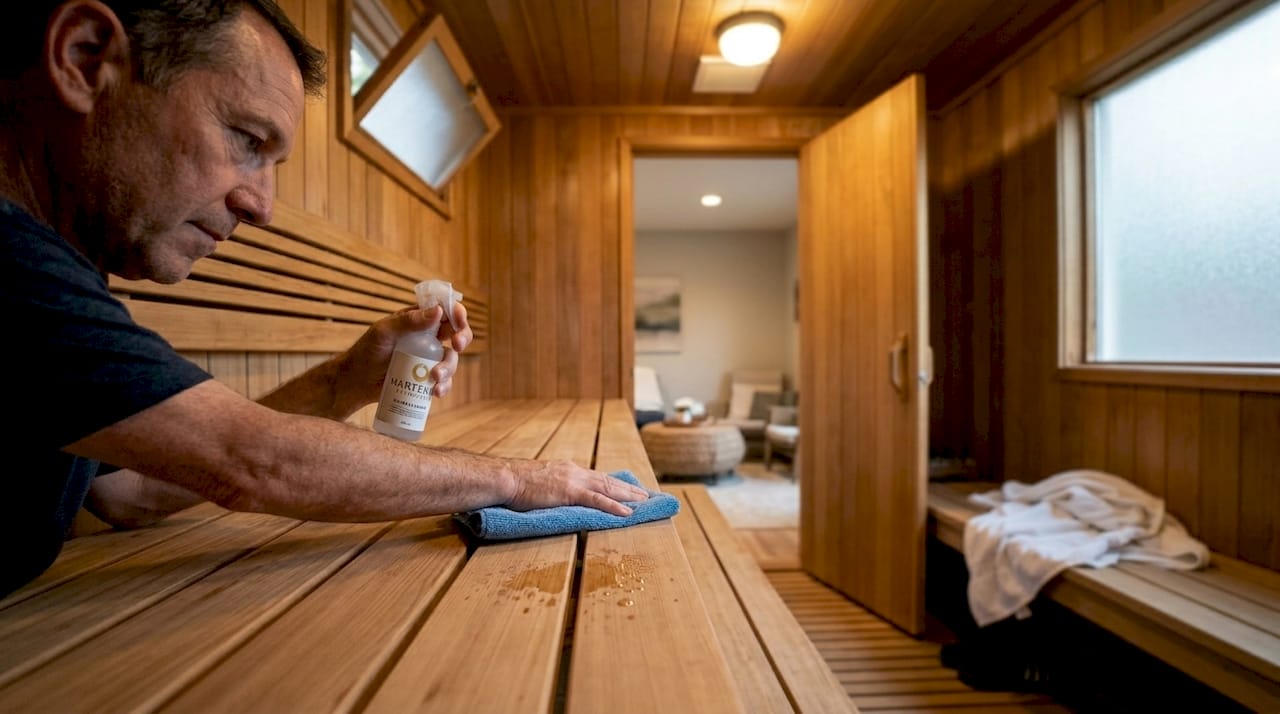
- Wipe down benches and walls. Dampen a microfiber cloth with your pH-neutral or manufacturer-approved cleaner solution and wipe all bench surfaces, backrests, and wall panels. Use light, circular motions to lift sweat residue without saturating the wood.
- Target high-touch and sweat-prone areas. The upper bench, headrests, and areas near the heater accumulate the most residue. Give these spots extra attention with a soft-bristle brush if needed. For stubborn stains, follow the product label and your manufacturer's directions — test first on an inconspicuous area.
- Clean the floor. Sauna floors collect the most moisture. Scrub with your brush and cleaner, then rinse with a minimal amount of clean water. Avoid flooding the floor, as standing water can warp wood over time.
- Dry all surfaces thoroughly. Use dry towels to absorb excess moisture from every surface, then leave the sauna door open and ventilate until fully dry — in many cases 20 to 30 minutes is a practical minimum. Never close a damp sauna.
| Cleaning Type | Frequency | Time Required | Key Focus |
|---|---|---|---|
| Quick clean | After every use | 5 to 10 minutes | Wipe benches, dry surfaces |
| Standard clean | Weekly | 20 to 30 minutes | Full wipe-down, floor scrub |
| Deep clean | Monthly | 45 to 60 minutes | All surfaces, component check, wood inspection |
Special Considerations for Infrared, Steam, and Traditional Saunas
Different sauna types require tailored cleaning methods to avoid damage and maintain hygiene. Always cross-reference these guidelines with your manufacturer's manual.
Infrared Saunas
Infrared saunas use electric heating panels rather than steam or rocks, which means moisture management is especially important. Never drench the interior or spray water directly near heating panels or electrical components. Because infrared saunas operate at lower ambient temperatures, they can be more prone to lingering odors if sweat residue is not removed consistently.
- Wipe panels and walls with a lightly damp cloth only
- Never spray cleaners directly onto heating elements
- Inspect panel connections periodically for moisture exposure
- Allow full air drying before closing the unit
Steam Saunas
Steam environments require extra attention because moisture and scale can build up around generators, nozzles, and sealed surfaces. Wipe down the generator exterior monthly with a damp cloth and check the nozzle for calcium deposits if you use hard water.
- For mineral scale, use a diluted vinegar or citric acid solution only on steam-safe, sealed, or non-wood surfaces — and rinse thoroughly
- Inspect tile grout and sealed surfaces for early mold signs
- Ensure drainage is clear and functioning after every use
- Clean the steam generator exterior monthly per manufacturer guidance
Traditional Wood-Burning and Electric Saunas
Traditional saunas handle moisture well due to their design, but the wood still needs protection. Avoid over-saturating the wood during cleaning. Proper ventilation after each session is non-negotiable.
- Check rocks and heater components according to your manufacturer's schedule
- Do not pour oils directly onto wood or heater surfaces unless the product is explicitly designed for sauna use and your manufacturer approves it
- Inspect wood surfaces monthly for soft spots, discoloration, or unusual smells
How to Prevent Odor, Residue, and Hygiene Issues
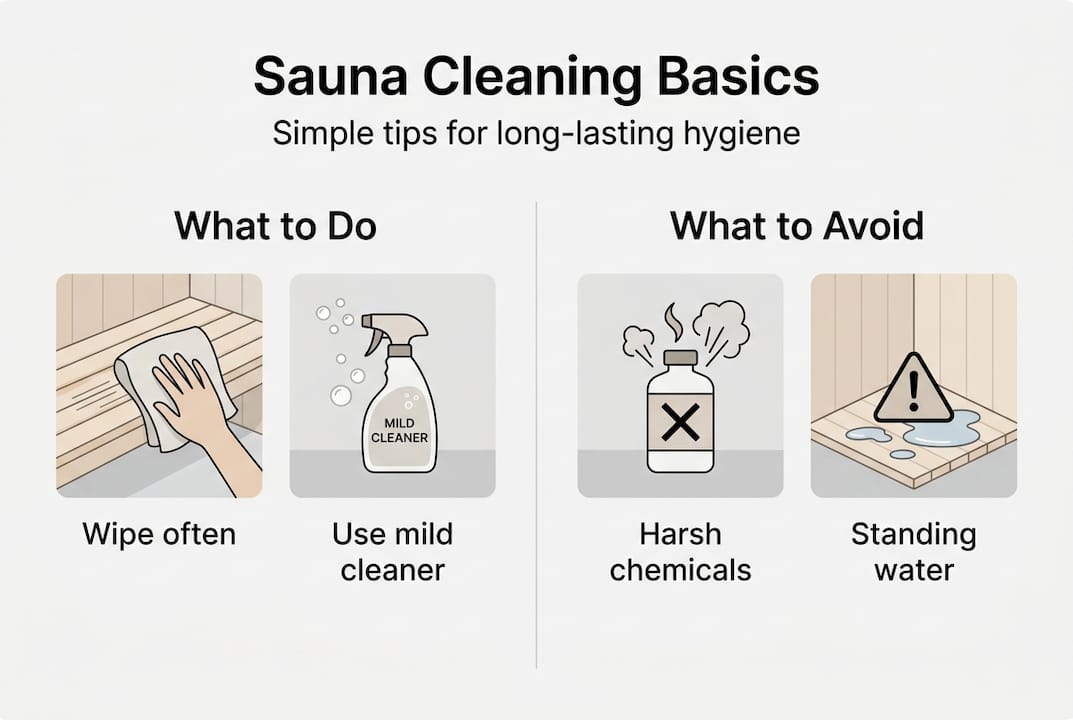
Prevention strategies are what keep your sauna feeling fresh between sessions without requiring constant deep cleaning. A clean towel every session and good post-session ventilation are the two most effective everyday hygiene habits — everything else builds on those two foundations.
- Shower before entering. This is a hygiene best practice, not just etiquette. It significantly reduces the body oils and sweat load transferred to wood surfaces.
- Always sit on a fresh towel during every session to absorb sweat before it soaks into the wood — the simplest and most consistent hygiene habit available to any sauna user.
- Ventilate after every session. Leave the sauna door open and ventilate until fully dry — 20 to 30 minutes is a practical minimum in most conditions.
- Remove and dry towels and rugs immediately after use. Damp textiles left in a closed sauna accelerate mold and odor buildup.
- Check the floor and heater area monthly for moisture buildup or visible residue.
- Avoid bringing food, scented products, or oils directly onto wood surfaces. Do not use oils on wood or heater components unless the product is explicitly designed for sauna use.
If you use essential oils for scent, dilute them in water and apply only to surfaces where your manufacturer indicates it is safe — not directly onto wood or heating elements. The scent benefit does not require direct wood application, and doing so can cause staining and residue over time.
"Consistent maintenance is the simplest way to ensure your sauna remains a sanctuary, not a source of stress."
Set a monthly reminder to do a full floor and component inspection. Look for soft spots in the wood, discoloration, or any unusual smells that don't resolve with standard cleaning. Catching these signs early prevents small issues from becoming expensive repairs.
Why Wiping Down Alone Isn't Enough
A quick wipe after each session feels productive, but it often misses the deeper layers where real hygiene issues develop. Sweat doesn't just sit on top of wood — it absorbs into the grain, carrying salts and body oils with it. Over time, this creates a residue layer that a damp cloth simply can't reach. A sauna that looks clean can still feel stale or cause skin irritation.
The long-term cost of shortcut cleaning is real. Wood that isn't properly maintained dries out, cracks, and loses its natural resistance to moisture. Steam generator nozzles can accumulate mineral scale that affects performance if not addressed according to the manufacturer's schedule. The relaxation quality of your sessions drops because the environment itself is compromised.
Investing 45 minutes once a month in a thorough deep clean is far less expensive than replacing benches or dealing with mold remediation. Treat your cleaning schedule with the same commitment as your sauna sessions — block it in your calendar, make it a ritual. A properly maintained sauna delivers a noticeably better experience every single time.
For pairing good hygiene with proper usage habits, the guide to optimizing sauna sessions is worth reading alongside this one.
FAQ: Home Sauna Cleaning
How often should a home sauna be cleaned?
Wipe surfaces after every use and perform a deep clean every 1 to 4 weeks depending on frequency of use. Higher usage means more frequent deep cleaning. Always follow your manufacturer's specific maintenance schedule.
Can I use bleach or harsh chemicals in my sauna?
Avoid bleach or ammonia unless your manufacturer specifically allows a sauna-safe disinfectant for a particular surface. Most sauna interiors require pH-neutral or manufacturer-approved cleaners. Harsh chemicals can degrade wood and release fumes when the sauna heats up.
How can I prevent my sauna from smelling?
The two most effective habits are sitting on a fresh towel every session and ventilating thoroughly after each use. Shower before entering to reduce the body oil and sweat load on wood surfaces. Consistent towel use and proper airflow address the root causes of most sauna odors.
Do infrared saunas require different cleaning methods?
Yes. Use less water and focus on wiping surfaces with a barely damp cloth. Never spray cleaners near heating elements or electrical components. Always follow the infrared unit manufacturer's specific instructions — different sauna types have meaningfully different requirements.
Can I use essential oils in my sauna?
Only if your manufacturer explicitly approves it and you apply them to the correct surface — typically diluted in water, never poured directly onto wood or heater components. Check your manual before introducing any oils or scents into the sauna environment.
How do I handle mineral scale in a steam sauna?
Use a diluted vinegar or citric acid solution on steam-safe, sealed, or non-wood surfaces only — never on wood. Rinse thoroughly after application. Check your steam generator manufacturer's guidance, as some units have specific descaling procedures or approved products.
Upgrade Your Home Sauna Setup
From premium infrared and hybrid saunas to accessories that make maintenance simpler — browse the full collection.
Sources
- Sauna.fi. "About the Hygiene of Sauna." Finnish Sauna Society, sauna.fi, 2022. Based on peer-reviewed Finnish research including Keinänen et al. (2002), Ojajärvi et al. (1985), and Saari et al. (2002).
- Finnmark Sauna. "The Complete Guide to Cleaning Your Sauna." finnmarksauna.com, 2025. Covers daily, weekly, and annual maintenance protocols for all sauna types.
- Finnmark Sauna. "How to Clean Your Sauna Wood." finnmarksauna.com. Wood care, pH-neutral cleaners, and surface protection guidance.
- Sauna from Finland. "The Secrets to a Hygienic Sauna Experience." saunafromfinland.com, 2025. Hygiene design, showering before entry, ventilation, and stone maintenance.
Recommended
- How to Optimize Your Home Sauna Sessions for Maximum Health Benefits – Marterra Elements
- Sauna for Longevity in 2026: Science-Backed Protocols & Best Home Models – Marterra Elements
- Home Sauna Trends 2026: Benefits, Science & Longevity Guide – Marterra Elements
- Best Home Sauna for Small Apartments & Tight Spaces 2026 – Marterra Elements
This article provides general guidance only and does not replace the manufacturer's cleaning and maintenance instructions for your specific sauna model. Always consult your product manual before introducing any cleaning products, oils, or procedures not explicitly covered by your manufacturer.