

Is Sauna Good for a Cold? Comfort, Safety, and Science
At a Glance
- No strong evidence shows that saunas cure or meaningfully shorten the duration of a cold — their role is comfort, not treatment
- Temporary relief from congestion, mild aches, and sinus pressure is possible — but effects don't last once you leave the sauna
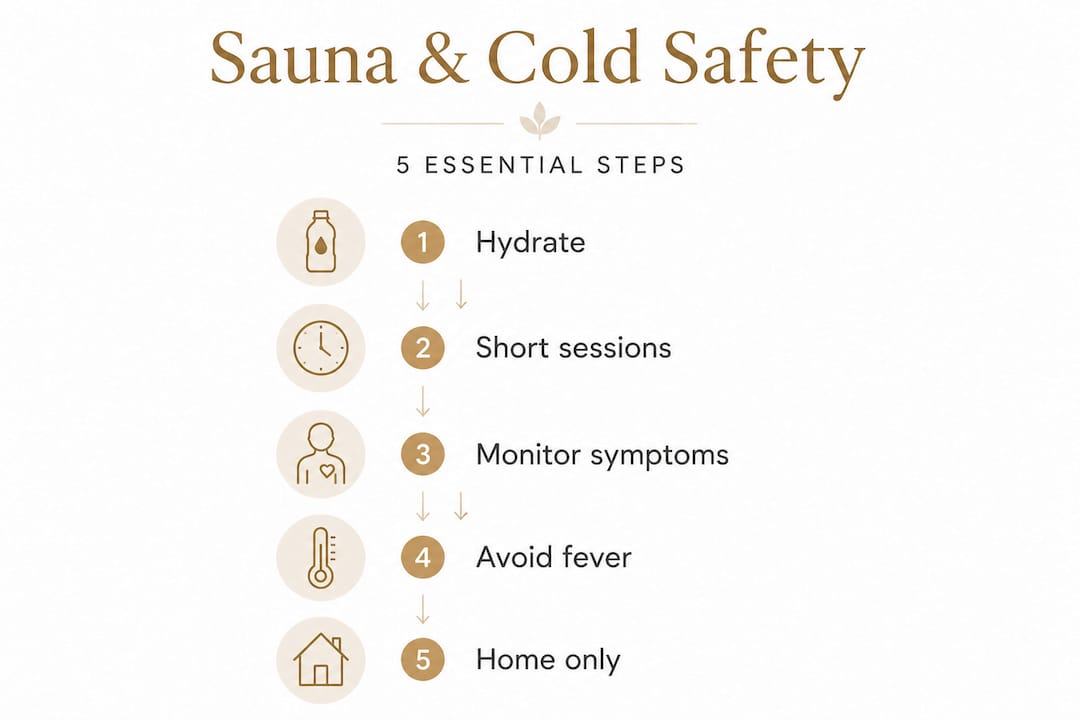
- Never use a sauna with a fever above 99.5°F — the combination of elevated core temperature and external heat stress increases dehydration and cardiovascular strain
- Use a private sauna only — you remain contagious for several days during a cold
- Keep sessions to 10–15 minutes maximum when sick, hydrate well before and after, and stop if you feel dizzy or worse
- Rest and hydration remain the primary tools of recovery — sauna is an optional comfort measure alongside them, not a substitute
The idea of sweating out a cold in a hot sauna feels intuitively right. Your body runs warm when it fights off a virus, so adding more heat must help — right? This belief is widespread, passed down through generations and reinforced by wellness culture. But the reality is more nuanced than folk wisdom suggests.
This guide breaks down what the science actually shows, which symptoms a sauna might temporarily ease, and how to use heat therapy safely when you are under the weather — so you can make an informed decision rather than one based on hope.
What the Science Says About Saunas and the Common Cold
The most rigorous data on heat therapy for the common cold comes from clinical trials studying heated, humidified air. The results are sobering for anyone hoping for a silver bullet. A Cochrane review of heated air therapy found that the evidence does not clearly show either benefits or harms, and the overall certainty of any benefit is low. In short, sauna is not a proven treatment that cures or meaningfully speeds recovery from a cold.
This does not mean saunas have zero value during illness. It means their role is limited and primarily about comfort rather than cure. There is a meaningful difference between the two, and conflating them can lead to unrealistic expectations or unsafe behavior.
| Claim | What Science Says | Evidence Quality |
|---|---|---|
| Sauna cures the common cold | Not supported | Very low |
| Sauna shortens cold duration | Not demonstrated | Low |
| Sauna prevents colds | Mixed results, some modest signals | Low to moderate |
| Sauna eases symptoms temporarily | Possible for some symptoms | Low |
| Sauna harms recovery | Not clearly demonstrated either | Uncertain |
"The evidence from randomized trials on heated, humidified air for the common cold does not demonstrate clear benefits or harms. Any benefit remains uncertain." — Cochrane Collaboration
The evidence for what regular sauna use actually supports — cardiovascular health, stress reduction, and mood — is considerably stronger than the evidence for treating active infections. If you have broader sauna questions beyond cold treatment, science has much clearer answers for those.
Temporary Symptom Relief: What You Might Feel
While saunas aren't a cure, many people notice some relief from their symptoms. The key word is temporary. Your airways do not stay open indefinitely once you leave the sauna, and the virus driving your symptoms is still fully active. That said, understanding which symptoms respond to heat can help you set realistic expectations.
- Nasal congestion: Warm, moist air can loosen mucus and make breathing feel easier while you are in the sauna — similar to standing over a bowl of hot water, just more pleasant
- Mild muscle aches: Heat increases blood flow to muscle tissue and may reduce the sensation of achiness — the same principle behind a hot bath after exercise
- Sinus pressure: Steam can soften thick secretions contributing to facial pressure, offering short-term relief without medication
- Fatigue: Some people find the warmth deeply relaxing, which may ease the subjective sense of exhaustion — though this does not speed cellular recovery
- Mild sore throat: Breathing warm, humidified air can temporarily soothe irritated mucous membranes lining the throat
It is worth noting that warm environments loosening mucus has not translated into a demonstrable overall symptom benefit in controlled clinical trials. The feeling of relief is real — but it is supportive comfort, not virus elimination.
| Symptom | Likely Sauna Benefit | Duration of Relief |
|---|---|---|
| Congestion | Moderate temporary ease | 15 to 45 minutes |
| Muscle aches | Mild to moderate | 30 to 60 minutes |
| Sore throat | Mild | During and shortly after |
| Fatigue | Mild subjective only | During session |
| Fever | None — may worsen | Avoid entirely |
The growth of home sauna use reflects a desire to integrate comfort tools into daily life. When used thoughtfully and with appropriate expectations, a home sauna session during a mild cold can be a reasonable addition to your rest-and-recover routine.
When to Skip the Sauna Entirely

Not every cold is the same, and not every person's body responds to heat stress the same way. The American Lung Association notes that people sick with a respiratory infection can potentially worsen their illness by dehydrating airways — a risk amplified when fever or acute illness is present.
You have a fever above 99.5°F — your core temperature is already elevated and external heat adds cardiovascular strain and accelerates fluid loss · You feel dizzy or lightheaded — signs of physiological strain · You have been vomiting or have diarrhea — sauna sweating compounds dehydration · You have a chronic respiratory condition (asthma, COPD) — hot, dry air can trigger bronchospasm · Your symptoms are worsening rapidly — rest is what your body needs · You are taking medications affecting blood pressure or fluid balance
The same sauna safety rules that apply to healthy use — hydration, session length limits, avoiding alcohol — become non-negotiable health boundaries during sickness.
How to Use a Sauna Safely During a Mild Cold
Assuming your symptoms are mild, above the neck only, and you have no fever, a carefully managed sauna session in a private setting can be a reasonable comfort measure. Think of it the way you would think of a warm bath or a bowl of chicken soup — not medicine, but genuinely supportive.
- Keep sessions short. 10 to 15 minutes maximum. Your immune system is already working overtime — a prolonged heat session increases physiological stress without increasing benefit.
- Hydrate before, during if possible, and after. Drink at least 16 ounces of water before entering and another 16 ounces after. Electrolyte drinks can help replace what you lose through sweat.
- Use a private sauna only. A home sauna is the appropriate setting when you are contagious.
- Avoid back-to-back sessions. When you are sick, stick to one round and then rest.
- Listen to your body in real time. If you feel dizzy, short of breath, or significantly worse, exit immediately.
- Combine with rest, not activity. Do not plan a workout after your sauna because you feel temporarily energized. That energy is borrowed, and overdoing it when sick can extend your recovery.
As noted by health practitioners, sauna as comfort care is best viewed as optional and short-duration, reserved for mild symptoms without fever. Rest and hydration remain the primary tools of recovery.
For those exploring how heat and recovery tools work together year-round, the hybrid sauna recovery approach — integrating infrared and traditional sauna modalities — provides a more nuanced foundation for a home wellness routine beyond acute illness.
Why Most People Misunderstand Saunas and Colds
Most people reach for heat therapy not because the evidence points there, but because sitting in a sauna feels like doing something. It is warm, quiet, and provides a sensation of relief that feels productive. Wellness culture has amplified this considerably, with claims about "immune boosting" and "detoxification through sweat" saturating social media.
The most defensible claim science can support is temporary symptom comfort. The virus itself is unaffected by the temperatures reached in a typical sauna session. This does not make sauna use foolish — it makes it human. People want relief, and some want to feel in control of their recovery. A sauna can serve those needs without being a cure. The key is honesty about what it delivers. Comfort is valuable. Reducing the miserable feeling of a stuffed nose for 30 minutes is a legitimate benefit. It just isn't antiviral medicine.
What truly matters for cold recovery has not changed: adequate sleep, consistent hydration, and letting your immune system run its course. Sauna can sit alongside those fundamentals as a comfort tool when used safely — but it should never replace them, and it should never replace a visit to a doctor when symptoms escalate, a fever persists, or recovery is not progressing as expected.
The broader picture of what saunas genuinely offer for stress and sleep is actually quite compelling. The mistake is simply expecting those benefits to extend to acute viral infection treatment, when the evidence does not support that extrapolation.
Reframe your relationship with your sauna during illness. It is not your treatment — it is your comfort, your moment of warmth in a difficult few days. Used with that mindset and appropriate safety measures, it has a legitimate place in your home wellness toolkit.
Explore Home Sauna Options
A private sauna means you can use heat therapy responsibly when you are sick — without exposing others and without the pressure of a public facility. The Finnmark FD-1 full spectrum infrared sauna delivers targeted infrared heat that many users find gentler and more breathable than traditional saunas — well-suited for comfort use during mild illness.
FAQ: Sauna and the Common Cold
Will a sauna help me get over a cold faster?
Current evidence does not support the idea that sauna use speeds up cold recovery. Cochrane-reviewed trials on heated air therapy found the evidence uncertain and of low quality. Sauna may offer temporary symptom comfort, but the virus itself is unaffected by typical sauna temperatures.
Is it safe to use a sauna if I have a fever?
No. Sauna use with a fever increases dehydration and heat stress in a body already under significant strain. Your core temperature is already elevated — adding external heat compounds cardiovascular demand and fluid loss without any compensating benefit. Expert health organizations advise against it.
What cold symptoms might temporarily improve in a sauna?
Nasal congestion and mild muscle aches are the symptoms most likely to feel better briefly. Sinus pressure and mild sore throat may also respond to warm, humidified air. However, symptom benefit certainty in clinical trials remains low, and the underlying infection is unaffected by heat.
Should I use a public sauna if I have a cold?
No. You remain contagious for several days during a cold. Avoiding public sauna use while sick is the responsible choice for yourself and — especially — for anyone around you who may be immunocompromised, elderly, or pregnant.
How long should a sauna session be when I'm sick?
Keep sessions to 10 to 15 minutes maximum. Your immune system is already working hard, and longer sessions add physiological stress without adding benefit. Hydrate well before and after, stick to one session rather than multiple rounds, and exit immediately if you feel dizzy or worse.
Recommended
- 10 Most Asked Sauna Questions (Science Answers 2026) – Marterra Elements
- Sauna, Cold Plunge, Repeat: How Contrast Therapy Affects Circulation & Recovery – Marterra Elements
- Home Sauna Trends 2026: Benefits, Science & Longevity Guide – Marterra Elements
- Sauna Before or After Workout: Science-Backed Protocols – Marterra Elements
- Sauna Health Benefits: Complete Guide for Recovery 2026 – WellnessLasVegas
This article is for informational purposes only and does not constitute medical advice. If you have a fever, worsening symptoms, or any underlying health condition, consult a qualified healthcare provider before using a sauna or making any changes to your recovery approach.