

What Happens to Your Body in a Sauna: A Step-by-Step Science Guide
At a Glance
- Measurable physiological changes — heart rate climb, vasodilation, norepinephrine surge — begin within the first few minutes, before you've broken a visible sweat
- Some research suggests humid or wet sauna conditions can create greater physiological strain than dry or infrared — sauna type matters for safety
- Growth hormone may begin to rise during the mid-session phase, but timing and magnitude vary by protocol and individual
- Post-session: some studies report transient cortisol decreases, GH may increase depending on protocol, heat shock proteins activate over 24 hours — recovery continues long after you towel off
- Finnish population studies associate 4–7 sessions per week with a 50% reduction in cardiovascular mortality — though this is observational data, not an RCT
- Consistency over intensity: a 15-minute session done four times a week delivers more long-term benefit than an occasional maximum-effort session
Most people step into a sauna expecting to sweat, relax, and maybe feel a little better afterward. What they don't realize is that measurable, physiological changes are already underway within the first few minutes. Your heart rate climbs, your blood vessels dilate, and your hormone levels begin shifting before you've even broken a visible sweat.
Understanding these changes isn't just fascinating science — it's the foundation for using heat intentionally and building a recovery routine that actually delivers lasting results.
Understanding the Sauna Environment: Key Conditions That Trigger Change
Sauna type shapes your physiological response more than most people expect. A Finnish sauna is traditionally set between about 70–100°C, with beginners often starting cooler (around 60–70°C) and building up to 80–90°C as they adapt. It operates at approximately 80–100°C with low humidity, delivering intense, dry heat to the body. In contrast, a wet sauna adds steam to reach high humidity, creating a different, more intense-feeling heat load. Dry saunas run at similar temperatures to Finnish saunas but with minimal moisture, while infrared saunas work at lower ambient temperatures (45–60°C), using infrared radiation that penetrates slightly deeper into tissue than convective air heat. If you're weighing your options, exploring hybrid sauna options can help you find the right fit for your recovery goals.
| Sauna Type | Temp Range | Humidity | Primary Effect |
|---|---|---|---|
| Finnish (dry) | 80–100°C | 10–20% | Deep heat, acute increases in norepinephrine and growth hormone |
| Wet / steam | 40–60°C | 80–100% | Potentially higher cardiovascular strain in some individuals |
| Infrared | 45–60°C | Low | Infrared radiation penetrating slightly deeper into tissue than convective air heat |
These conditions matter because your body responds differently to dry versus humid heat. Research suggests that humid or wet sauna conditions can create greater cardiovascular strain in some individuals compared with dry saunas — even though wet saunas produce less fluid loss by body weight. Lower sweat loss does not necessarily mean lower cardiovascular stress.
In a Finnish sauna at peak temperatures, oral temperature rises 1.1 to 3.2°C and heart rate can climb 60 to 130% above baseline — a significant physiological event, not a passive relaxation exercise.
Stay hydrated before, during, and after every session · Limit sessions to a maximum of 20 minutes, especially in wet or high-humidity environments · People with low blood pressure, heart conditions, or cardiovascular disease should consult a physician first · Avoid alcohol before or during sauna use · Exit immediately if you feel dizzy, nauseous, or short of breath
Minutes 1–5: Initial Bodily Responses

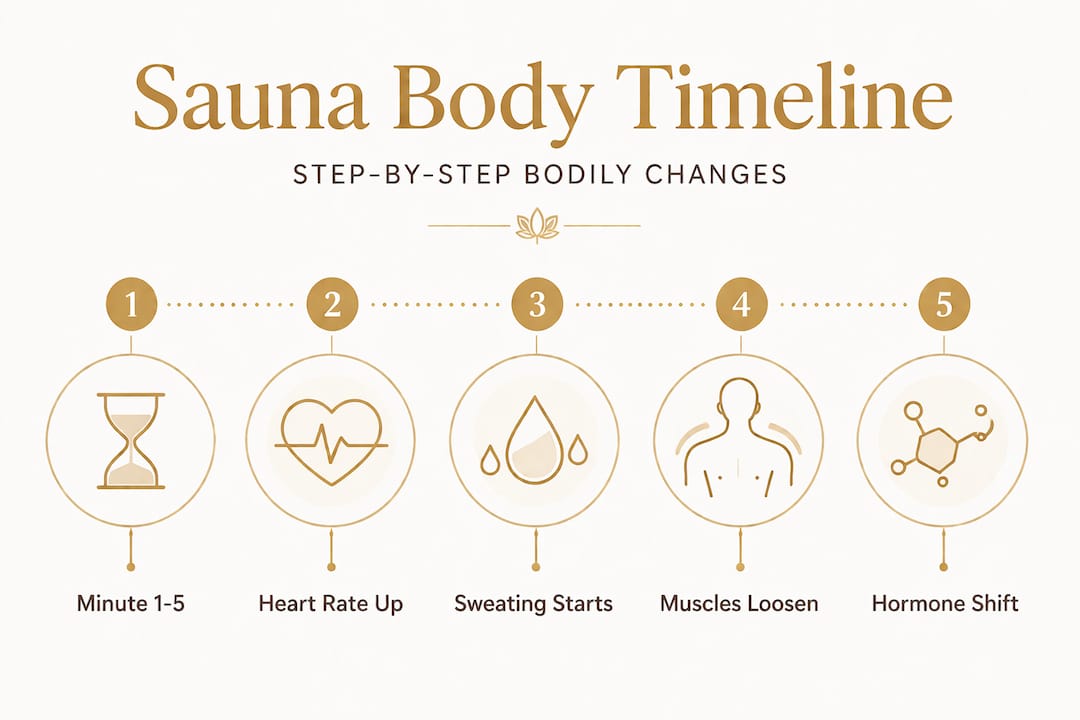
The first five minutes are deceptively active. You may not feel much beyond warmth on your skin, but beneath the surface your cardiovascular system is already working hard. Skin temperature rises almost immediately, triggering vasodilation (widening of blood vessels), an increase in cardiac output, and a rapid spike in norepinephrine — a hormone associated with alertness and stress adaptation.
Core temperature begins rising within the first few minutes, ultimately climbing 1 to 2°C over a 15 to 20 minute session as your hypothalamus works to manage heat. Heart rate starts its climb in tandem.
| Physiological Marker | Moderate Cardio | Sauna (First 5 Min) |
|---|---|---|
| Heart rate increase | 50–70% above baseline | Up to 60–130% above baseline |
| Norepinephrine | 1.5–2x | 2–3x increase |
| Core temp rise | Gradual, effort-dependent | Rapid, passive |
| Calorie demand | High (active muscle use) | Moderate (passive heat load) |
What makes the sauna unique is that you're generating a cardiovascular response similar to moderate exercise without the muscular demand. The norepinephrine surge is especially notable — peer-reviewed research found noradrenaline levels rising 100 to 310% above baseline in Finnish sauna conditions. This supports both alertness during the session and may explain the reported mood lift many users feel afterward. It's also linked to stress and mental recovery, with regular sauna use showing measurable reductions in perceived stress over time.
- Skin temperature rises, activating peripheral thermoreceptors (heat-sensing nerve endings)
- Blood vessels near the skin surface dilate to push heat away from core organs
- Heart rate accelerates to support increased blood circulation
- Norepinephrine and noradrenaline surge, signaling the body to adapt to heat stress
- Sweating begins at a modest rate as the cooling mechanism activates
For those interested in how these sauna and hormone changes play out over repeated sessions — the hormonal shifts don't flatten back to baseline. With consistent sauna use, your body adapts in ways that improve heat tolerance and neuroendocrine resilience over time.
Minutes 6–15: Sweating, Circulation, and Ongoing Adaptation
This is the phase most people recognize: heavy sweating, muscle loosening, and a quieting of mental noise. Sweat output increases significantly, and fluid and electrolyte loss reaches approximately 0.5 liters per session on average — including sodium, potassium, and magnesium. Post-session rehydration with an electrolyte-rich drink matters more than plain water alone.
Blood vessels remain dilated, allowing more blood to circulate near the skin surface. This peripheral vasodilation reduces resistance in the cardiovascular system — one mechanism behind sauna's association with lower blood pressure over time. Harvard sauna research supports the cardiovascular benefits of regular sauna use, particularly for heart health markers in otherwise healthy adults.
Growth hormone (GH) may begin to rise during this phase, depending on session length and individual factors — potentially supporting cellular repair and metabolic efficiency. Timing and effect sizes vary across studies.
- Sweating reaches peak output — approximately 0.5 liters of fluid and electrolytes shed per session
- Norepinephrine remains elevated at 2 to 3 times baseline, sustaining alertness and cardiovascular drive
- Growth hormone may begin to rise during this phase — timing and magnitude vary by protocol and individual
- Muscle tension drops as blood flow to soft tissue improves and deep heat penetrates
- Mental clarity and calm often set in as circulating hormones stabilize
"The mid-session phase is where the majority of cardiovascular and hormonal benefits are consolidated. Most of the meaningful physiological adaptation occurs between minutes six and fifteen." — Synthesized from peer-reviewed sauna physiology research
For those building an intentional approach, optimizing sauna sessions and sauna longevity protocols lay out evidence-informed frameworks for session frequency, timing, and pairing with other recovery methods.
Minutes 16–20: Approaching the Limit
By this point, your core temperature is near its peak, peripheral blood flow is maximized, and your cardiovascular system is working hard to manage heat dissipation. These final minutes represent the upper edge of what most research considers safe for general populations.
Most professional and clinical guidelines cap standard sauna sessions at 20 minutes for good reason. Beyond that threshold, the risk of heat exhaustion, dehydration, and cardiovascular stress increases meaningfully — especially in wet or high-humidity environments.
- Monitor dizziness or lightheadedness — early warning signs that vasodilation has reduced blood pressure to a level that demands you exit
- Avoid wet sauna if you have cardiovascular concerns — some research suggests wet sauna conditions can create greater cardiovascular strain in some individuals compared with dry sauna, despite producing less sweat volume
- Don't stand up quickly — orthostatic hypotension (sudden blood pressure drop on standing) is a real risk during or immediately after a session
- If you have low blood pressure or heart conditions, exit by minute 15 — extended exposure amplifies cardiovascular demand beyond what these conditions can safely tolerate
- Keep water accessible — sipping during this final phase helps offset fluid loss without disrupting the session
For a thorough overview of who should and shouldn't use a sauna, the sauna safety FAQs resource covers contraindications and practical guidance in depth.
After the Sauna: Recovery, Hormonal After-Effects, and Long-Term Benefits
The post-sauna window is often underestimated. Most people focus on what happens inside the heat room, but some of the most clinically significant changes occur in the 24 hours after your session ends.
Growth Hormone
Some intensive protocols have reported growth hormone increases up to about 16-fold above baseline, though responses vary widely and diminish with repeated exposure.
Cortisol
Some studies report transient post-sauna cortisol decreases, but the magnitude varies between individuals and protocols — which may support sleep quality and reduced perceived stress.
Endorphins
Increase post-session, generating the calm, positive mood many users describe as a "post-sauna glow" — subjective but well-documented.
Heat Shock Proteins
Activate over the following 24 hours — functioning as an internal repair crew by stabilizing damaged proteins and reducing exercise-induced muscle soreness.
Heat shock proteins (HSPs) are one of the most compelling reasons to take sauna use seriously as a recovery tool. They're activated specifically by heat stress and play a protective role in cellular repair — which is why regular sauna users often report faster recovery from training and less residual muscle soreness.
For more on building a sustainable long-term practice, the sauna longevity trends resource connects emerging research with practical home-use approaches.
Why Chasing Perfect Protocols Misses the Real Point
There are no true minute-by-minute scientific studies. The breakdowns you read — including this one — are synthesized from peer-reviewed physiological data on heart rate, core temperature, and hormone responses measured at various points during and after sauna sessions. They are genuinely useful educational tools. But they are not rigid prescriptions.
No single protocol fits every person. A Finnish athlete who has used saunas since childhood has a different baseline adaptation than someone stepping into heat for the first time at forty. Physiological differences in body composition, cardiovascular fitness, and heat tolerance are significant.
What the science supports most strongly is consistency over intensity. The cardiovascular and long-term health benefits associated with sauna use accumulate across frequent, regular sessions — not from pushing to the absolute limit of every session. A 15-minute session done four times a week will, over months and years, deliver far more benefit than a punishing 20-minute session done once.
Self-awareness is the skill worth developing. Your body will tell you when you're adapting well: sessions that once felt intense start to feel manageable, your resting heart rate may improve, and post-session recovery feels more effortless. Those are reliable signals of progress that no protocol chart can replicate.
Optimize Your Recovery at Home
Consistent, on-demand access to quality heat makes everything in this article more actionable. The Finnmark FD-5 four-person sauna combines infrared, steam, and red light in one unit. Ready to pair heat with cold? The sauna and cold plunge bundle delivers the contrast therapy protocol that recovery-focused practitioners consistently recommend.
FAQ: What Your Body Does in a Sauna
How quickly do sauna benefits start?
Sauna-induced physiological changes — higher heart rate, vasodilation, norepinephrine surge — begin within the first few minutes. Core temperature and heart rate rise almost immediately after entering the heat environment.
How much sweat and fluid do I lose in a typical session?
Most people lose about 0.5 liters of sweat and electrolytes during a standard 15 to 20 minute session. Post-session rehydration is essential — and electrolyte drinks help more than plain water alone since sodium, potassium, and magnesium are all lost through sweat.
Do all saunas have the same health impact?
No. Some research suggests wet or humid sauna conditions can produce greater cardiovascular strain in some individuals compared with dry or infrared saunas — despite lower total sweat output. The choice of sauna type matters both for your safety and for your specific recovery goals.
What happens to my hormones after leaving the sauna?
After exiting, growth hormone may increase in some protocols, some studies report transient post-sauna cortisol decreases, and Endorphins may increase post-session, contributing to the calm, positive mood many users report — though sauna-specific endorphin data is thinner than the evidence for GH or cortisol changes. Heat shock proteins then activate over the following 24 hours, supporting cellular repair and reducing residual muscle soreness.
Should anyone avoid using a sauna?
People with low blood pressure or certain heart conditions should consult a physician before using a sauna. Extra caution is advised in wet or high-humidity environments. Anyone feeling dizzy, nauseous, or short of breath during a session should exit immediately.
Recommended
- How to Optimize Your Home Sauna Sessions for Maximum Health Benefits – Marterra Elements
- How to Clean a Sauna: Step-by-Step Maintenance Guide – Marterra Elements
- Sauna Before or After Workout: Science-Backed Protocols – Marterra Elements
- Heat, Hormones, and Metabolism: What We Know About Sauna and Weight Management – Marterra Elements
- Sauna Health Benefits: Complete Guide for Recovery 2026 – WellnessLasVegas
This article is for informational purposes only and does not constitute medical advice. Always consult a qualified healthcare provider before beginning a sauna practice, particularly if you have cardiovascular conditions, low blood pressure, or any chronic health concern.