

What Is Contrast Therapy? Science, Benefits & Practices
At a Glance
- Contrast therapy alternates heat and cold to support circulation and perceived recovery — the evidence is strongest for short-term post-exercise soreness, not chronic pain or injury treatment
- One study reported up to 50% greater soreness reduction versus passive rest — effect sizes vary considerably by protocol and population
- The alternating mechanism drives vascular pumping — a rhythmic expansion and contraction of blood vessels that moves metabolic waste and supports nutrient delivery
- Cold exposure right after resistance training may blunt hypertrophy signaling — lifters should apply contrast therapy strategically, not reflexively
- Anyone with cardiovascular conditions or known heart disease should get medical clearance first — and those who are pregnant should consult a healthcare provider before use
- Consistency matters more than perfection — a simple hot shower plus cold plunge protocol done regularly outperforms an aggressive protocol used sporadically
After an intense training session, most people reach for either an ice pack or a heating pad, unsure which will actually help. That instinct to pick one is understandable, but it misses a more effective approach. Contrast therapy alternates heat and cold exposure in deliberate cycles — and the research behind it is consistently encouraging for short-term athletic recovery.
This guide breaks down exactly how contrast therapy works, what the science supports, who benefits most, and how to practice it safely at home or in a gym setting.
How Contrast Therapy Works
Contrast therapy is not simply switching between a hot tub and a cold shower. It is a structured recovery method built on a specific physiological principle: alternating heat and cold to support circulation through repeated vessel constriction and dilation.
Heat exposure causes vasodilation — your blood vessels widen and circulation increases. Cold exposure causes vasoconstriction — vessels narrow and blood pulls back toward your core. When you alternate between the two, your vascular system essentially pumps. Vessels expand and contract repeatedly, which may help circulation and perceived recovery by cycling between vessel expansion and contraction.
This is sometimes called the vascular pumping effect, and it is what separates contrast therapy from passive ice application or solo sauna use. It is this dynamic interplay — not either extreme in isolation — that may support circulation, fluid movement, and subjective recovery outcomes.
- Heat phase: Increases blood flow, relaxes muscle tissue, promotes nutrient delivery to recovering tissue
- Cold phase: Reduces localized inflammation, slows nerve conduction for pain relief, triggers vasoconstriction
- Alternation: Creates a rhythmic pumping action that may accelerate recovery beyond what either phase achieves alone
What makes contrast therapy distinct is also its versatility. You can apply it through water immersion, sauna and cold plunge combinations, or purpose-built compression devices. The core principle stays the same regardless of the method. For a deeper look at how specific temperatures and durations affect outcomes, see the heat and cold therapy balance guide.
Benefits of Contrast Therapy: What the Research Shows
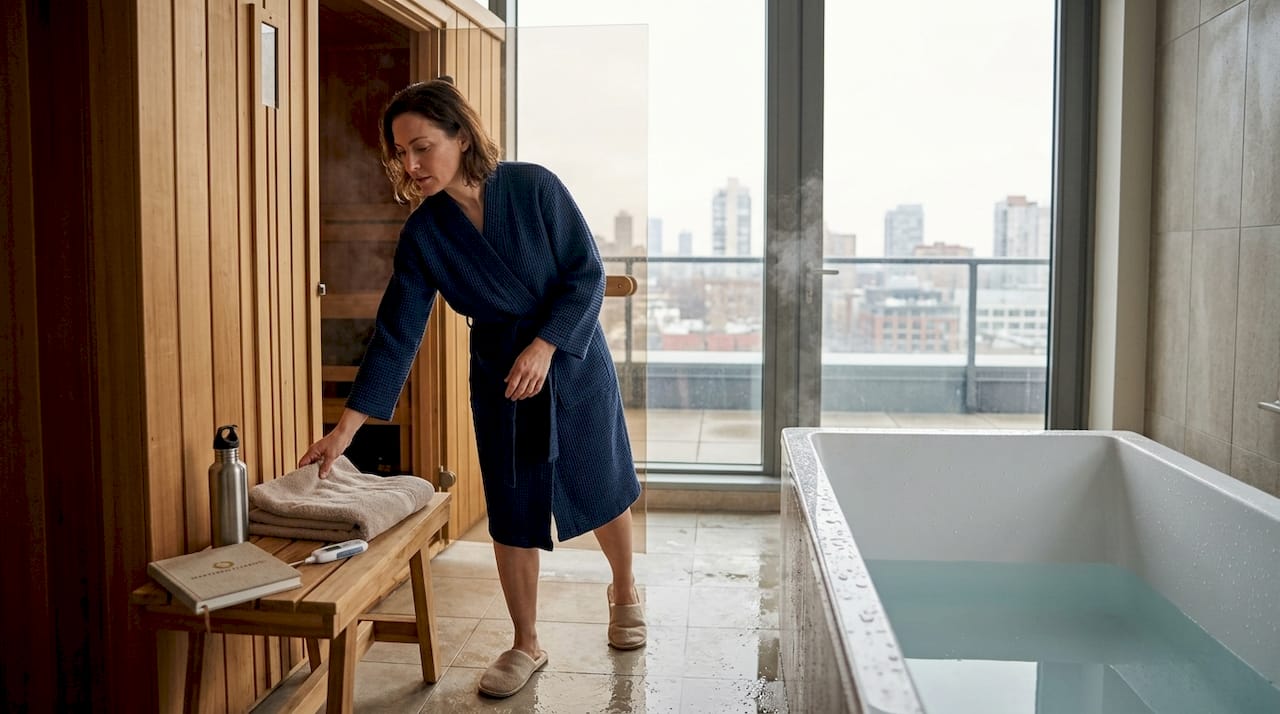
The research is not perfect, but it is consistently encouraging for short-term athletic recovery. The evidence is strongest for post-exercise soreness and perceived readiness to train — it does not strongly support contrast therapy as a treatment for chronic pain, long-term injury rehabilitation, or general wellness in the absence of other healthy habits.
The most well-documented benefit is reduced delayed onset muscle soreness (DOMS). A scoping review of clinical studies found consistent evidence for reduced pain, improved range of motion, and faster return to functional performance after aerobic and endurance activity.
- One study reported up to 50% greater soreness reduction versus passive rest — though effect sizes vary considerably by protocol, population, and activity type
- Associated with preserved strength output in the 24 to 48 hours following intense exercise in some research
- May improve range of motion and joint mobility post-training
- Faster perceived recovery — athletes report feeling ready to train again sooner
- May reduce swelling and tissue inflammation after sport-related exertion
| Recovery Method | DOMS Reduction | Circulation Benefit | Practical Ease |
|---|---|---|---|
| Passive rest | Low | Minimal | High |
| Cold alone | Moderate | Moderate | High |
| Heat alone | Moderate | Good | High |
| Contrast therapy | Promising in short-term studies | Strong | Moderate |
Contrast therapy has outperformed passive recovery in some short-term DOMS studies, and often matches standalone temperature methods in those contexts — though it is not consistently superior across all outcomes or populations. Where it requires more setup is access — you need both heat and cold, which takes more preparation than simply resting.
One important caveat: claims about contrast therapy as a treatment for chronic conditions should be viewed with appropriate skepticism. The strongest evidence is for short-term recovery after aerobic or endurance activity. Long-term effects for injury rehabilitation are still under active review.
For those serious about performance optimization, faster recovery methods are worth pairing with contrast therapy as part of a broader stack. The home spa health benefits of regular heat exposure also complement contrast therapy's effects on mood, cortisol reduction, and sleep quality.
Methods and Practical Applications
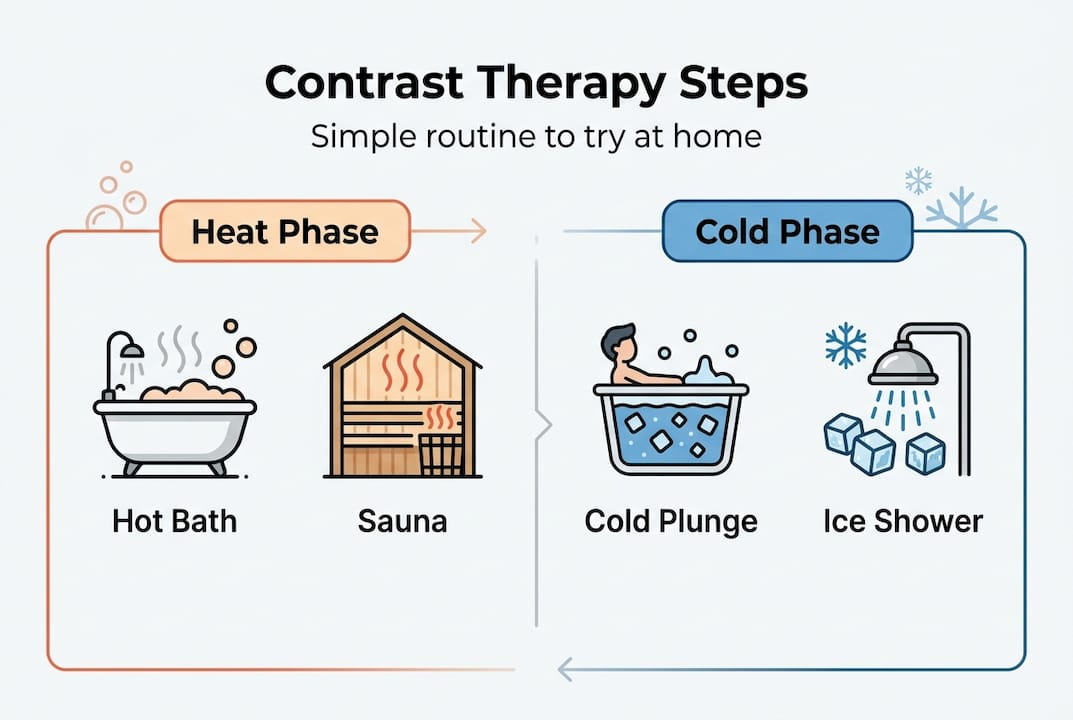
The method you choose depends on your setup, budget, and recovery goals. The most studied approach is contrast water immersion — alternating between a warm bath or hot tub and a cold plunge or ice bath. Protocols typically involve 1 to 4 minutes in heat followed by 1 to 2 minutes in cold, repeated for 3 to 5 cycles.
Sauna and cold plunge combinations are increasingly popular and easy to replicate at home with the right equipment. The sauna phase typically runs 10 to 15 minutes, followed by a 2 to 3 minute cold plunge. This format tends to be highly adherent because many people find the sauna phase rewarding on its own. The SaunaLife S1N + Wizzisauna SR01 bundle pairs both in one home setup.
Compression therapy devices offer an alternative for those without water-based options. These devices use pneumatic pressure to simulate some of the vascular pumping benefits — convenient and low-effort, but generally considered a secondary option when immersion is not practical. The Rapid Reboot REGEN Complete is purpose-built for this use case.
| Setting | Cost | Convenience | Effectiveness |
|---|---|---|---|
| Home (DIY baths) | Low | Moderate | Good |
| Home (sauna + plunge) | Higher upfront | Very high | Excellent |
| Gym or spa | Moderate | Lower (travel) | Excellent |
| Compression device | Moderate | Very high | Good |
How to Start a Simple At-Home Contrast Routine
- Warm up with 10 minutes in a hot shower or bath (100 to 104°F)
- Transition to cold water (50 to 60°F) for 1 to 2 minutes
- Return to heat for 2 to 3 minutes
- Repeat the cycle 3 to 4 times
- End on cold to support the anti-inflammatory effect
- Hydrate and rest for at least 20 minutes after your session
Safety, Risks, and When to Avoid Contrast Therapy
The method is well-tolerated by most healthy adults, but it is not risk-free, and certain populations should approach it with caution.
Who Should Get Clearance First
Anyone with known heart disease, blood-pressure instability, or cardiovascular conditions should get medical clearance before attempting contrast therapy — rapid temperature shifts create vascular demands that may be harder to tolerate in these groups. Also applies to those on medications affecting circulation or blood pressure, or anyone with open wounds, skin infections, or nerve damage affecting temperature sensitivity. Pregnant individuals should consult a healthcare provider before use.
Acute Injuries
Avoid applying heat to a fresh injury. Cold alone or RICE (rest, ice, compression, elevation) remains the safer first response for the initial 24 to 72 hours after acute trauma. Contrast therapy is not appropriate in the early injury phase.
Common side effects are usually mild and include dizziness after cold exposure, temporary skin redness, and fatigue following longer sessions. These typically resolve quickly with rest and hydration.
What Most Guides Miss About Contrast Therapy
Most contrast therapy content lands in one of two camps: pure enthusiasm or blanket skepticism. Neither serves you well.
Contrast therapy has genuine evidence behind it for short-term athletic recovery. But it is not a stand-alone solution for chronic pain, long-term injury rehab, or general wellness in the absence of other healthy habits. If your sleep is poor and your nutrition is inconsistent, adding contrast sessions will not compensate for those gaps.
What most people also miss is the need for individual protocol design. Tolerance to cold varies widely. Some people thrive on 2 minute cold plunges; others find even 30 seconds genuinely stressful. Starting conservatively and building gradually is far more effective than copying someone else's aggressive protocol.
The evidence on contrast therapy's limits also shows it is not consistently superior to heat or cold alone across all outcomes. Use it strategically — matched to your goal, your training phase, and your individual tolerance — not reflexively after every session.
For those ready to build a full home contrast setup, the Finnmark FD-5 Trinity XL combines infrared, steam, and red light in one unit — ideal paired with the Revive Inflatable Cold Plunge for a complete contrast station at home.
FAQ: Contrast Therapy
What is the main benefit of contrast therapy?
Contrast therapy has been shown in some studies to reduce muscle soreness and support perceived recovery. One study reported up to 50% greater soreness reduction versus passive rest — though results vary considerably by protocol and population. It is most valuable for athletes training at high frequency who need to recover quickly between sessions.
Is contrast therapy safe for everyone?
Not for everyone. Anyone with known heart disease, blood-pressure instability, or cardiovascular conditions should get medical clearance first — rapid temperature shifts create vascular demands that may be harder to tolerate in these groups. Pregnant individuals should consult a healthcare provider before use. Acute injuries are also a contraindication in the early phase.
How does contrast therapy compare to ice or heat alone?
For short-term DOMS reduction after aerobic activity, contrast therapy tends to outperform either method used in isolation in available studies. That said, it is not clearly superior across all outcomes or all athlete types — context, setup, and individual tolerance all affect the result.
How long should a contrast therapy session last?
Most protocols run 15 to 30 minutes total, with cycles of 1 to 4 minutes of heat and 1 to 2 minutes of cold, repeated for 3 to 5 cycles per session. Starting at the lower end and building gradually is a better approach than jumping into a full protocol immediately.
Should I use contrast therapy after strength training?
Use it strategically. Cold immersion immediately after resistance training may blunt some hypertrophy signaling. If muscle growth is your primary goal, wait at least 4 to 6 hours or reserve contrast therapy for dedicated recovery days between strength sessions. For endurance or aerobic training, timing constraints are less significant.
Build Your Home Contrast Therapy Setup
From infrared saunas and portable cold plunges to compression recovery systems — browse the full collection.
Recommended
Sources
- Sellwood KL, et al. "The Effect of Contrast Water Therapy on Symptoms of Delayed Onset Muscle Soreness." Journal of Strength and Conditioning Research, 2007. journals.lww.com
- Mechanisms and Efficacy of Contrast Therapy for Musculoskeletal Painful Disease: A Scoping Review. PMC, 2025. pmc.ncbi.nlm.nih.gov
- Bieuzen F, Bleakley CM, Costello JT. "Contrast Water Therapy and Exercise Induced Muscle Damage: A Systematic Review and Meta-Analysis." PLOS ONE, 2013. journals.plos.org
- Roberts LA, et al. "Post-exercise cold water immersion attenuates acute anabolic signalling and long-term adaptations in muscle to strength training." Journal of Physiology, 2015. physoc.onlinelibrary.wiley.com
This article is for informational purposes only and does not constitute medical advice. Contrast therapy is not appropriate for all individuals. Always consult a qualified healthcare provider before starting any new recovery practice, particularly if you have cardiovascular disease, are pregnant, or are managing an injury.